


- Afhalen na 1 uur in een winkel met voorraad
- Gratis thuislevering in België vanaf € 30
- Ruim aanbod met 7 miljoen producten
- Afhalen na 1 uur in een winkel met voorraad
- Gratis thuislevering in België vanaf € 30
- Ruim aanbod met 7 miljoen producten





€ 49,95
+ 99 punten
Eenvoudig bestellen
Veilig betalen


Gratis thuislevering vanaf € 30 (via bpost)
Gratis levering in je Standaard Boekhandel
Omschrijving
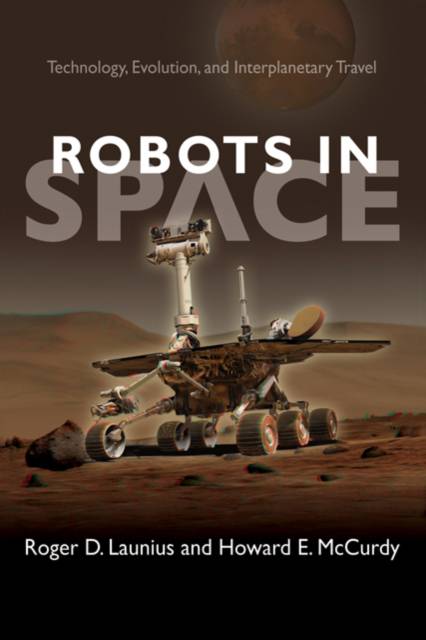
Given the near incomprehensible enormity of the universe, it appears almost inevitable that humankind will one day find a planet that appears to be much like the Earth. This discovery will no doubt reignite the lure of interplanetary travel. Will we be up to the task? And, given our limited resources, biological constraints, and the general hostility of space, what shape should we expect such expeditions to take? In Robots in Space, Roger Launius and Howard McCurdy tackle these seemingly fanciful questions with rigorous scholarship and disciplined imagination, jumping comfortably among the worlds of rocketry, engineering, public policy, and science fantasy to expound upon the possibilities and improbabilities involved in trekking across the Milky Way and beyond. They survey the literature-fictional as well as academic studies; outline the progress of space programs in the United States and other nations; and assess the current state of affairs to offer a conclusion startling only to those who haven't spent time with Asimov, Heinlein, and Clarke: to traverse the cosmos, humans must embrace and entwine themselves with advanced robotic technologies. Their discussion is as entertaining as it is edifying and their assertions are as sound as they are fantastical. Rather than asking us to suspend disbelief, Robots in Space demands that we accept facts as they evolve.
Specificaties
Betrokkenen
- Auteur(s):
- Uitgeverij:
Inhoud
- Aantal bladzijden:
- 336
- Taal:
- Engels
- Reeks:
Eigenschappen
- Productcode (EAN):
- 9781421407630
- Verschijningsdatum:
- 11/07/2012
- Uitvoering:
- Paperback
- Formaat:
- Trade paperback (VS)
- Afmetingen:
- 152 mm x 229 mm
- Gewicht:
- 453 g



Alleen bij Standaard Boekhandel
+ 99 punten op je klantenkaart van Standaard Boekhandel
CADEAU

AANGERADEN


Beoordelingen
We publiceren alleen reviews die voldoen aan de voorwaarden voor reviews. Bekijk onze voorwaarden voor reviews.