


- Afhalen na 1 uur in een winkel met voorraad
- Gratis thuislevering in België vanaf € 30
- Ruim aanbod met 7 miljoen producten
- Afhalen na 1 uur in een winkel met voorraad
- Gratis thuislevering in België vanaf € 30
- Ruim aanbod met 7 miljoen producten





€ 233,95
+ 467 punten
Eenvoudig bestellen
Veilig betalen


Gratis thuislevering vanaf € 30 (via bpost)
Gratis levering in je Standaard Boekhandel
Omschrijving
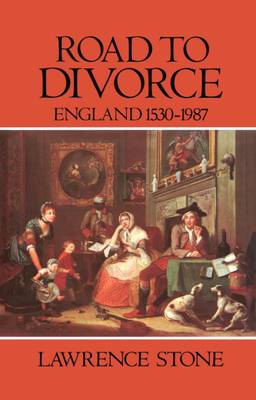
Lawrence Stone is one of the world's foremost historians. In such widely acclaimed volumes as The Crisis of the Aristocracy, The Family, Sex and Marriage in England and The Open Society, he has shown himself to be a provocative and engaging writer as well as a master chronicler of English family life. Now, with Road to Divorce, Stone examines the complex ways in which English men and women have used, twisted, and defied the law to deal with marital breakdown.
Despite the infamous divorce of Henry VIII in 1529, Britons before the 20th century were predominantly, in Stone's words, "a non-divorcing and non-separating society." In fact, before divorce was legalized in 1857, England was the only Protestant country with virtually no avenue for divorce on the grounds of adultery, desertion, or cruelty. Yet marriages did fail, and in Road to Divorce, Stone examines a goldmine of court records--in which witnesses speak freely about love, sex, adultery, and marriage--memoirs, correspondence, and popular imaginative works to reveal how lawyers and the laity coped with marital discord. Equally important, in tracing the history of divorce, Stone has discovered a way to recapture the slow, irregular, and tentative evolution of moral values concerning relations between the sexes as well as the consequent shift from concepts of patriarchy to those of sexual equality. He thus offers a privileged, indeed almost unique, insight into the interaction of the public spheres of morality, religion, and the law.
Written by the foremost historian of family life, Road to Divorce provides the first full study of a topic rich in historical interest and contemporary importance, one that offers astonishingly frank and intimate insights into our ancestors' changing views about what makes and breaks a marriage.
Despite the infamous divorce of Henry VIII in 1529, Britons before the 20th century were predominantly, in Stone's words, "a non-divorcing and non-separating society." In fact, before divorce was legalized in 1857, England was the only Protestant country with virtually no avenue for divorce on the grounds of adultery, desertion, or cruelty. Yet marriages did fail, and in Road to Divorce, Stone examines a goldmine of court records--in which witnesses speak freely about love, sex, adultery, and marriage--memoirs, correspondence, and popular imaginative works to reveal how lawyers and the laity coped with marital discord. Equally important, in tracing the history of divorce, Stone has discovered a way to recapture the slow, irregular, and tentative evolution of moral values concerning relations between the sexes as well as the consequent shift from concepts of patriarchy to those of sexual equality. He thus offers a privileged, indeed almost unique, insight into the interaction of the public spheres of morality, religion, and the law.
Written by the foremost historian of family life, Road to Divorce provides the first full study of a topic rich in historical interest and contemporary importance, one that offers astonishingly frank and intimate insights into our ancestors' changing views about what makes and breaks a marriage.
Specificaties
Betrokkenen
- Auteur(s):
- Uitgeverij:
Inhoud
- Aantal bladzijden:
- 488
- Taal:
- Engels
Eigenschappen
- Productcode (EAN):
- 9780198226512
- Verschijningsdatum:
- 06/12/1990
- Uitvoering:
- Hardcover
- Formaat:
- Genaaid
- Afmetingen:
- 165 mm x 243 mm
- Gewicht:
- 984 g


Alleen bij Standaard Boekhandel
+ 467 punten op je klantenkaart van Standaard Boekhandel
CADEAU

AANGERADEN


Beoordelingen
We publiceren alleen reviews die voldoen aan de voorwaarden voor reviews. Bekijk onze voorwaarden voor reviews.