


- Afhalen na 1 uur in een winkel met voorraad
- Gratis thuislevering in België vanaf € 30
- Ruim aanbod met 7 miljoen producten
- Afhalen na 1 uur in een winkel met voorraad
- Gratis thuislevering in België vanaf € 30
- Ruim aanbod met 7 miljoen producten





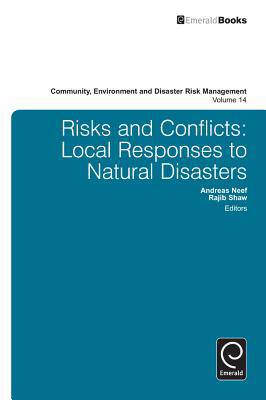
Risks and Conflicts
Local Responses to Natural Disasters
€ 267,45
+ 534 punten
Omschrijving
Communities affected by natural disasters are often stigmatized as being passive with regard to disaster prevention, mitigation and adaptation, waiting only for government assistance in the aftermath of such events. However, many innovative community initiatives have been developed to address natural disasters, which are often characterized as "local responses". While scrutinizing the potential strength and comparative advantage of community-based disaster response, this book analyzes and illustrates how individuals, families and social groups in rural and urban communities perceive natural disasters, their underlying reasons and their effects on their livelihoods, and documents and analyzes the role of local responses to natural disasters and conflict. Key factors determining the degree of vulnerability and resilience of affected communities are also elicited. Several pivotal issues related to community-based disaster responses are addressed, such as the relationship between local and external knowledge in addressing disasters, the relevance of institutional and policy frameworks for community-based disaster response and the role of social capital and collective action.
Specificaties
Betrokkenen
- Uitgeverij:
Inhoud
- Aantal bladzijden:
- 304
- Taal:
- Engels
- Reeks:
- Reeksnummer:
- nr. 14
Eigenschappen
- Productcode (EAN):
- 9781781908204
- Verschijningsdatum:
- 18/12/2013
- Uitvoering:
- Hardcover
- Formaat:
- Genaaid
- Afmetingen:
- 155 mm x 231 mm
- Gewicht:
- 566 g

Alleen bij Standaard Boekhandel
+ 534 punten op je klantenkaart van Standaard Boekhandel
Cadeau

AANGERADEN


Beoordelingen
We publiceren alleen reviews die voldoen aan de voorwaarden voor reviews. Bekijk onze voorwaarden voor reviews.