


- Afhalen na 1 uur in een winkel met voorraad
- Gratis thuislevering in België vanaf € 30
- Ruim aanbod met 7 miljoen producten
- Afhalen na 1 uur in een winkel met voorraad
- Gratis thuislevering in België vanaf € 30
- Ruim aanbod met 7 miljoen producten





€ 115,45
Uitvoering
Omschrijving
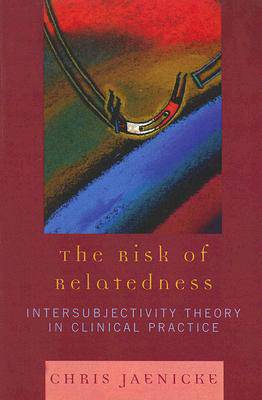
The success of psychotherapy depends on the development of both the patient and the psychotherapist. This is the central thesis of Jaenicke's book, which addresses the clinical application of intersubjectivity theory in terms of the risk-what Jaenicke terms the 'risk of relatedness'-the theory poses to both therapist and patient when executed as practice. In contrast to Freudian theory, intersubjectivity theory considers therapy a process that is co-constructed by patient and therapist, where the therapist eschews the role of neutral authority who provides patients with new insights and whose subjective reaction to the therapeutic process is sealed off from the therapist-patient interaction. Jaenicke 'translates' and reformulates the theory's complexities into the terms of practical psychotherapeutic work. Using eight fundamental psychoanalytic concepts-empathy, defense, splitting, the unconscious, trauma, the myth of the isolated mind, transference/countertransference, and affect-he gives a vivid account of how intersubjectivity theory can be put into practice while describing common difficulties. Numerous case studies provide concrete examples.
Specificaties
Betrokkenen
- Auteur(s):
- Uitgeverij:
Inhoud
- Aantal bladzijden:
- 168
- Taal:
- Engels
Eigenschappen
- Productcode (EAN):
- 9780765705600
- Verschijningsdatum:
- 23/10/2007
- Uitvoering:
- Paperback
- Formaat:
- Trade paperback (VS)
- Afmetingen:
- 154 mm x 228 mm
- Gewicht:
- 263 g


Alleen bij Standaard Boekhandel
Cadeau

AANGERADEN


Beoordelingen
We publiceren alleen reviews die voldoen aan de voorwaarden voor reviews. Bekijk onze voorwaarden voor reviews.