


- Afhalen na 1 uur in een winkel met voorraad
- Gratis thuislevering in België vanaf € 30
- Ruim aanbod met 7 miljoen producten
- Afhalen na 1 uur in een winkel met voorraad
- Gratis thuislevering in België vanaf € 30
- Ruim aanbod met 7 miljoen producten





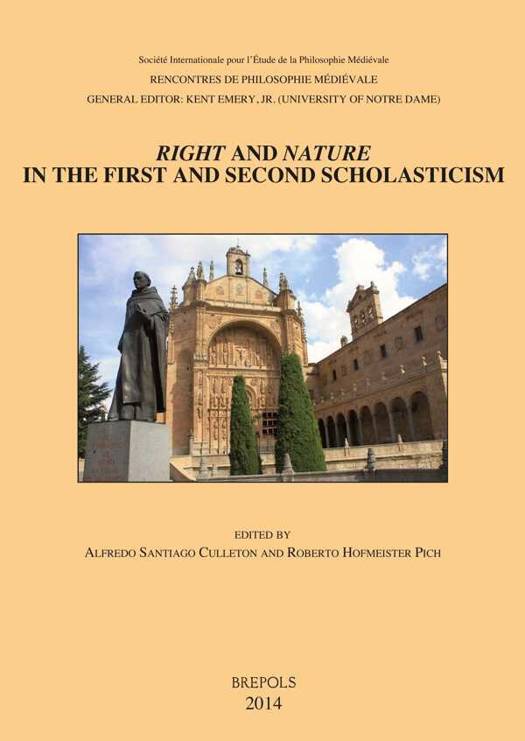
Right and Nature in the First and Second Scholasticism / Derecho Y Naturaleza En La Primera Y Segunda Escolastica
Acts of the Xviith Annual Colloquium of the Societe Internationale Pour l'Etude de la Philosophie Medievale, Porto Alegre, Brazil, 15-18 September 2010
Roberto Hofmeister Pich
€ 90,10
+ 180 punten
Omschrijving
This volume focuses on the reception and development of Aristotelian-Thomistic and (to a lesser extent) Scotistic political theory, natural law, positive law and the law of nations in the sixteenth and seventeenth centuries. Authors of the 'Second Scholasticism' (as discussed in this volume, at least, mainly Iberian philosophers and theologians of the sixteenth and seventeenth centuries) not only commented on the works and updated the teachings of medieval Scholastic masters but also introduced many new ideas in all areas of philosophy, namely logic, natural philosophy, metaphysics, moral philosophy, political philosophy and the philosophy of law. In particular, issues arising from the "discovery" of the New World presented new challenges to these thinkers, provoking various reactions among them and causing them to develop new interpretations and theories especially in practical philosophy and theology. In this volume, scholars from Europe, North America and South America identify and describe some of the main topics and central lines of thinking in this still quite unknown chapter in the history of philosophical ideas. The contributors focus on the reception and development of Aristotelian-Thomistic and (to a lesser extent) Scotistic political theory, natural law, positive law, and law of nations in the sixteenth and seventeenth centuries; some authors, moreover, address issues in the development of metaphysics during the same period. For the most part, the studies presented here concern the writings and thought of masters from the Universities of Salamanca, Alcala, Evora and Coimbra, who responded to questions and conceived new theories in political philosophy, law and moral philosophy closely related to the issues pertaining to the Spanish and Portuguese colonies in the New World.
Specificaties
Betrokkenen
- Auteur(s):
- Uitgeverij:
Inhoud
- Aantal bladzijden:
- 493
- Taal:
- Engels
- Reeks:
- Reeksnummer:
- nr. 16
Eigenschappen
- Productcode (EAN):
- 9782503554587
- Verschijningsdatum:
- 31/12/2014
- Uitvoering:
- Paperback
- Formaat:
- Trade paperback (VS)
- Afmetingen:
- 157 mm x 231 mm
- Gewicht:
- 798 g


Alleen bij Standaard Boekhandel
+ 180 punten op je klantenkaart van Standaard Boekhandel
Cadeau

AANGERADEN


Beoordelingen
We publiceren alleen reviews die voldoen aan de voorwaarden voor reviews. Bekijk onze voorwaarden voor reviews.