


- Afhalen na 1 uur in een winkel met voorraad
- Gratis thuislevering in België vanaf € 30
- Ruim aanbod met 7 miljoen producten
- Afhalen na 1 uur in een winkel met voorraad
- Gratis thuislevering in België vanaf € 30
- Ruim aanbod met 7 miljoen producten





€ 195,45
+ 390 punten
Eenvoudig bestellen
Veilig betalen


Gratis thuislevering vanaf € 30 (via bpost)
Gratis levering in je Standaard Boekhandel
Omschrijving
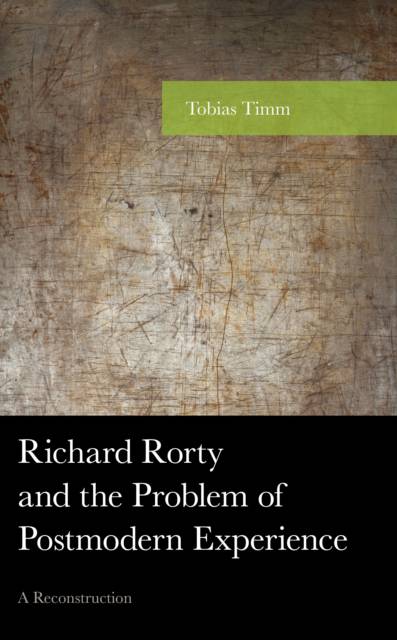
Richard Rorty, perhaps the most important philosopher of the past century, refused to write meaningfully about experience due to his postmodern inclination to associate experience with a belief in objectivity and foundational truths. Richard Rorty and the Problem of Postmodern Experience: A Reconstruction explores the context, reasoning, and consequences of this resistance. While for much of our history experience was valued for its potential to teach us about the world, Rorty and his fellow postmodern thinkers encouraged us to doubt the narrative that we can use experience to make epistemological progress. Rather than pursue universal truths about the world, Rorty suggested that we recognize all of our beliefs about the world as being social constructions. In his project to recover a concept of experience from within the framework Rorty has constructed, Tobias Timm describes how classical pragmatist theories of experience are naïve about the problem of foundationalism. He also explains how the most common phenomenological work lacks an active subject; experience here is simply something that happens to us, rather than something we actively seek to improve. Timm demonstrates that despite Rorty's insistence that we talk about language instead of experience, there are strong experiential elements in his work. Rorty's romanticism, and his optimism about the accomplishments of western culture, are remedial to the pessimism of postmodern discussions about experience.
Specificaties
Betrokkenen
- Auteur(s):
- Uitgeverij:
Inhoud
- Aantal bladzijden:
- 164
- Taal:
- Engels
- Reeks:
Eigenschappen
- Productcode (EAN):
- 9781498589239
- Verschijningsdatum:
- 5/07/2019
- Uitvoering:
- Hardcover
- Formaat:
- Genaaid
- Afmetingen:
- 152 mm x 229 mm
- Gewicht:
- 412 g



Alleen bij Standaard Boekhandel
+ 390 punten op je klantenkaart van Standaard Boekhandel
CADEAU

AANGERADEN


Beoordelingen
We publiceren alleen reviews die voldoen aan de voorwaarden voor reviews. Bekijk onze voorwaarden voor reviews.