


- Afhalen na 1 uur in een winkel met voorraad
- Gratis thuislevering in België vanaf € 30
- Ruim aanbod met 7 miljoen producten
- Afhalen na 1 uur in een winkel met voorraad
- Gratis thuislevering in België vanaf € 30
- Ruim aanbod met 7 miljoen producten





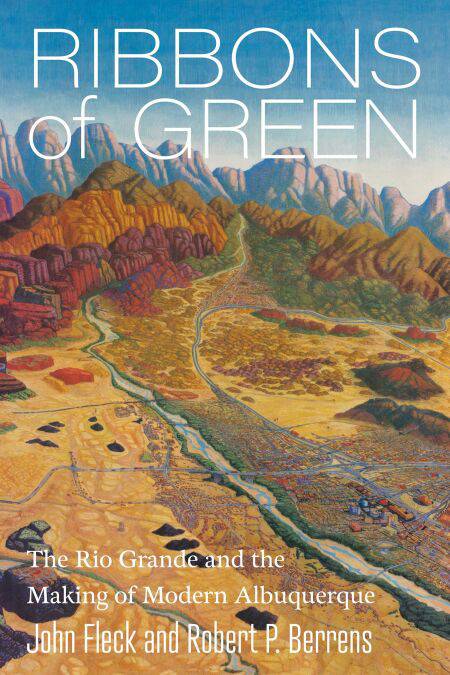
Ribbons of Green E-BOOK
The Rio Grande and the Making of Modern Albuquerque
John Fleck, Robert P. Berrens
€ 20,12
+ 20 punten
Uitvoering
Omschrijving
The first combined social and ecological look at how institutions in New Mexico intentionally built the Rio Grande Valley through the heart of Albuquerque to create “natural” corridors of green spaces in a modern American city.
Dry one year, overflowing the next, the Rio Grande has sustained its arid valley for millennia. In Ribbons of Green, John Fleck and Robert P. Berrens seek to understand twenty-first-century Albuquerque’s relationship with the Rio Grande by exploring the social and ecological interactions that describe how this high-desert city developed astride a capricious river. In every phase of the Duke City’s history, living with the Rio Grande posed problems that required collective action by its stakeholders to irrigate, build river crossings, drain the valley’s floor, and protect residents from flooding.
These collective decisions ultimately changed the course of the river, resulting in intentionally designed “ribbons of green” that dominate today’s cityscape. The Rio Grande in turn altered the collective psyche of Albuquerque. For many residents, the city’s bosque is their only interaction with nature, but these green corridors are very much a human creation. Ribbons of Green explores how Albuquerque built its environment to create a valley floor that its residents have come to adore and how, in a climate-altered world, we might keep it.
Dry one year, overflowing the next, the Rio Grande has sustained its arid valley for millennia. In Ribbons of Green, John Fleck and Robert P. Berrens seek to understand twenty-first-century Albuquerque’s relationship with the Rio Grande by exploring the social and ecological interactions that describe how this high-desert city developed astride a capricious river. In every phase of the Duke City’s history, living with the Rio Grande posed problems that required collective action by its stakeholders to irrigate, build river crossings, drain the valley’s floor, and protect residents from flooding.
These collective decisions ultimately changed the course of the river, resulting in intentionally designed “ribbons of green” that dominate today’s cityscape. The Rio Grande in turn altered the collective psyche of Albuquerque. For many residents, the city’s bosque is their only interaction with nature, but these green corridors are very much a human creation. Ribbons of Green explores how Albuquerque built its environment to create a valley floor that its residents have come to adore and how, in a climate-altered world, we might keep it.
Specificaties
Betrokkenen
- Auteur(s):
- Uitgeverij:
Inhoud
- Aantal bladzijden:
- 296
- Taal:
- Engels
- Reeks:
Eigenschappen
- Productcode (EAN):
- 9780826369697
- Verschijningsdatum:
- 1/06/2026
- Uitvoering:
- E-book
- Beveiligd met:
- Adobe DRM
- Formaat:
- ePub


Alleen bij Standaard Boekhandel
+ 20 punten op je klantenkaart van Standaard Boekhandel
Cadeau

AANGERADEN


Beoordelingen
We publiceren alleen reviews die voldoen aan de voorwaarden voor reviews. Bekijk onze voorwaarden voor reviews.