


- Afhalen na 1 uur in een winkel met voorraad
- Gratis thuislevering in België vanaf € 30
- Ruim aanbod met 7 miljoen producten
- Afhalen na 1 uur in een winkel met voorraad
- Gratis thuislevering in België vanaf € 30
- Ruim aanbod met 7 miljoen producten





€ 31,80
Omschrijving
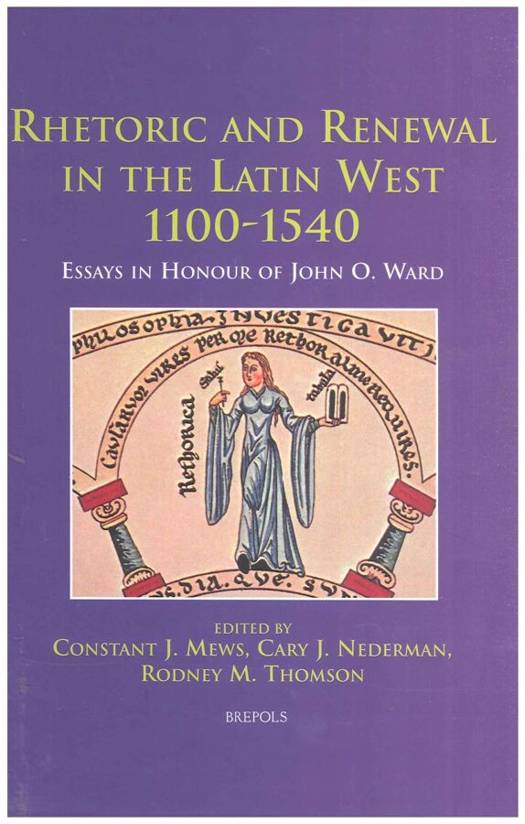
The essays in this volume, presented in honour of John O. Ward, explore the role of rhetoric in promoting reform and renewal in the Latin West from Peter Abelard (1079-1142) to Juan Luis Vives (1492-1540). Ward, who has taught for many years at the University of Sydney, has been an influential and creative force in medieval and Renaissance studies both in Australia and internationally. This volume opens with a personal memoir and bibliography of Ward's publications, as well as an overview of the study of medieval rhetoric. The first of the three sections, 'Abelard and Rhetoric', relates Abelard's rhetoric to his logic, his theology, and his relationship to Heloise. A second section, 'Voices of Reform', considers various writers (William of Malmesbury, John of Salisbury, Richard FitzNigel, and William of Ockham) who bring rhetorical techniques to bear upon analysis of social conditions. A third section, 'Rhetoric in Transition', deals with the evolution of rhetorical theory between the late fourteenth and early sixteenth centuries. The volume will be of interest not just to specialists in rhetoric, but to all concerned with issues of reform and renewal in European culture during the period 1100-1540.
Specificaties
Betrokkenen
- Auteur(s):
- Uitgeverij:
Inhoud
- Aantal bladzijden:
- 280
- Taal:
- Engels
- Reeks:
- Reeksnummer:
- nr. 2
Eigenschappen
- Productcode (EAN):
- 9782503513409
- Verschijningsdatum:
- 24/06/2003
- Uitvoering:
- Hardcover
- Formaat:
- Genaaid
- Afmetingen:
- 162 mm x 249 mm
- Gewicht:
- 625 g


Alleen bij Standaard Boekhandel
Cadeau

AANGERADEN


Beoordelingen
We publiceren alleen reviews die voldoen aan de voorwaarden voor reviews. Bekijk onze voorwaarden voor reviews.