


- Afhalen na 1 uur in een winkel met voorraad
- Gratis thuislevering in België vanaf € 30
- Ruim aanbod met 7 miljoen producten
- Afhalen na 1 uur in een winkel met voorraad
- Gratis thuislevering in België vanaf € 30
- Ruim aanbod met 7 miljoen producten





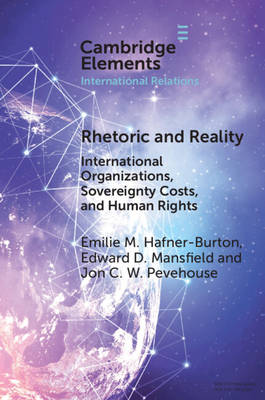
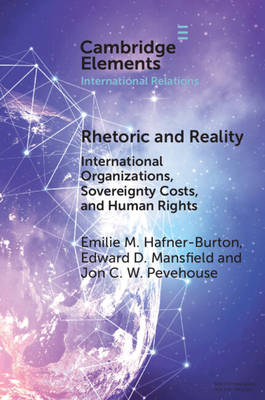
Rhetoric and Reality
International Organizations, Sovereignty Costs, and Human Rights
Emilie M Hafner-Burton, Edward D Mansfield, Jon C W Pevehouse
€ 24,45
+ 48 punten
Uitvoering
Omschrijving
The number of international human rights institutions and countries participating in them has risen dramatically in recent decades, precipitating debates about why countries make such commitments and whether these commitments improve member's human rights behavior. These debates have centered on a small number of human rights treaties, with far less attention paid to the larger number of international organizations (IOs) that aim to promote human rights. The Element argues and then demonstrates that state decisions about joining these IOs depends on the institutional design of the organizations, specifically sovereignty costs for member states. These costs stem from the constraints that IOs impose and vary substantially. Emerging democracies are most likely to enter high sovereignty cost IOs. Furthermore, organizations that generate higher sovereignty costs tend to produce better human rights outcomes than those generating fewer sovereignty costs for all regimes. This title is also available as Open Access on Cambridge Core.
Specificaties
Betrokkenen
- Auteur(s):
- Uitgeverij:
Inhoud
- Aantal bladzijden:
- 75
- Taal:
- Engels
- Reeks:
Eigenschappen
- Productcode (EAN):
- 9781009638142
- Verschijningsdatum:
- 31/05/2026
- Uitvoering:
- Paperback
- Formaat:
- Trade paperback (VS)


Alleen bij Standaard Boekhandel
+ 48 punten op je klantenkaart van Standaard Boekhandel
Cadeau

AANGERADEN


Beoordelingen
We publiceren alleen reviews die voldoen aan de voorwaarden voor reviews. Bekijk onze voorwaarden voor reviews.