


- Afhalen na 1 uur in een winkel met voorraad
- Gratis thuislevering in België vanaf € 30
- Ruim aanbod met 7 miljoen producten
- Afhalen na 1 uur in een winkel met voorraad
- Gratis thuislevering in België vanaf € 30
- Ruim aanbod met 7 miljoen producten





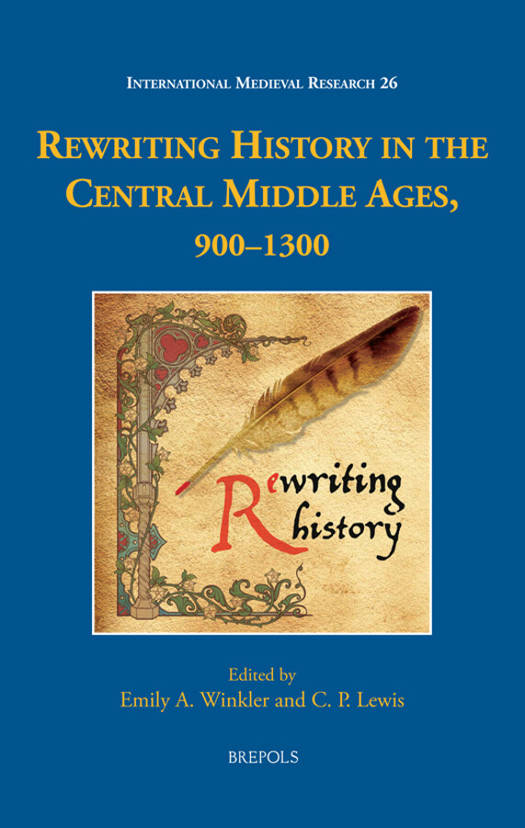
Rewriting History in the Central Middle Ages, 900-1300
Emily A. Winkler
€ 100,70
+ 201 punten
Omschrijving
In the Middle Ages, rewriting history was a distinct activity within the larger sphere of historical writing. Rewriting started with existing historical accounts, recasting them into new forms as new stories about the past. Changes in circumstances drove rewriting, encouraging historically literate writers and their patrons to examine their histories anew, to jettison what no longer made sense or was useful, and to supply new material to fill gaps or expand ideas. Writers rewrote not only for the present and future, but also for the past. They curated the past and reorganized its intellectual artifacts, thereby revealing new facets of old history to future eyes. Rewriting was a defining characteristic of the central Middle Ages (900-1300), distinct both from earlier traditions of universal history and from later traditions of making continuations which left the narrative core intact. Reimagining the past by rewriting happened across genres, in the vernaculars as well as the universal languages of Latin and Greek, and across Europe, west and east. The chapters in this book explore the reasons and methods for rewriting, ranging across the Anglo-Norman realm, France and Flanders, Christian Iberia, Norman Italy and the Mediterranean, Byzantium, and Georgia and Armenia. Together, they show a set of rewriters who made themselves the authorities for their own age.
Specificaties
Betrokkenen
- Auteur(s):
- Uitgeverij:
Inhoud
- Aantal bladzijden:
- 342
- Taal:
- Engels
- Reeks:
- Reeksnummer:
- nr. 26
Eigenschappen
- Productcode (EAN):
- 9782503596860
- Verschijningsdatum:
- 1/04/2022
- Uitvoering:
- Hardcover
- Formaat:
- Genaaid
- Afmetingen:
- 164 mm x 240 mm
- Gewicht:
- 703 g


Alleen bij Standaard Boekhandel
+ 201 punten op je klantenkaart van Standaard Boekhandel
Cadeau

AANGERADEN


Beoordelingen
We publiceren alleen reviews die voldoen aan de voorwaarden voor reviews. Bekijk onze voorwaarden voor reviews.