


- Afhalen na 1 uur in een winkel met voorraad
- Gratis thuislevering in België vanaf € 30
- Ruim aanbod met 7 miljoen producten
- Afhalen na 1 uur in een winkel met voorraad
- Gratis thuislevering in België vanaf € 30
- Ruim aanbod met 7 miljoen producten





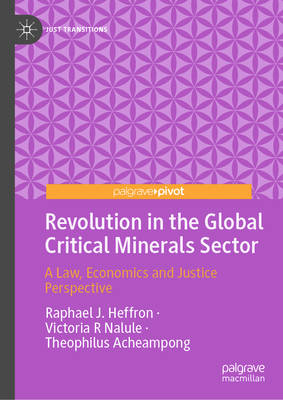
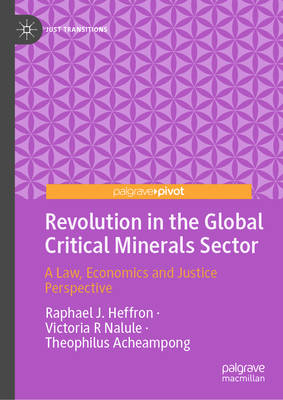
Revolution in the Global Critical Minerals Sector
A Law, Economics and Justice Perspective
Raphael J Heffron, Victoria R Nalule, Theophilus Acheampong
€ 43,45
+ 86 punten
Omschrijving
This book examines mining justice through a problem-driven political economy lens, analysing the complex interests that shape the exploitation of critical minerals needed to power the global energy transition and achieve decarbonisation across different jurisdictions. As demand for these minerals intensifies, questions of equity, governance, and sustainability are becoming central to debates on mineral extraction and resource governance. The book explores how critical mineral development can advance not only global climate objectives but also broader goals of restorative mining and economic justice. It focuses on the technological, economic, institutional, and legal dynamics that shape mineral governance and influence how the benefits and burdens of extraction are distributed. By situating mining within wider debates on development, industrial policy, and global energy transitions, the analysis highlights both the opportunities and tensions associated with expanding mineral extraction to support decarbonisation. Adopting a multidisciplinary approach, the book integrates insights from economics, law, political science, and social analysis to examine how justice can be conceptualised and operationalised in the mining sector. It develops a rigorous theoretical framework for understanding justice in mineral resource governance while engaging with the practical realities faced by governments, communities, and industry actors. Through this integrated perspective, the book provides a clear account of the governance challenges surrounding critical mineral development and offers new insights into how mining can be aligned with equitable and sustainable development in a rapidly evolving global energy landscape.
Specificaties
Betrokkenen
- Auteur(s):
- Uitgeverij:
Inhoud
- Aantal bladzijden:
- 135
- Taal:
- Engels
- Reeks:
Eigenschappen
- Productcode (EAN):
- 9783032263650
- Verschijningsdatum:
- 22/08/2026
- Uitvoering:
- Hardcover
- Formaat:
- Genaaid
- Afmetingen:
- 148 mm x 210 mm


Alleen bij Standaard Boekhandel
+ 86 punten op je klantenkaart van Standaard Boekhandel
Cadeau

AANGERADEN


Beoordelingen
We publiceren alleen reviews die voldoen aan de voorwaarden voor reviews. Bekijk onze voorwaarden voor reviews.