



Je cadeautjes zeker op tijd in huis hebben voor de feestdagen? Kom langs in onze winkels en vind het perfecte geschenk!
- Afhalen na 1 uur in een winkel met voorraad
- Gratis thuislevering in België vanaf € 30
- Ruim aanbod met 7 miljoen producten
Je cadeautjes zeker op tijd in huis hebben voor de feestdagen? Kom langs in onze winkels en vind het perfecte geschenk!
- Afhalen na 1 uur in een winkel met voorraad
- Gratis thuislevering in België vanaf € 30
- Ruim aanbod met 7 miljoen producten





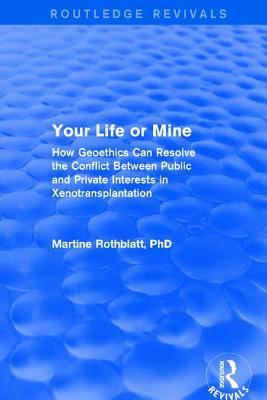
Your Life or Mine
How Geoethics Can Resolve the Conflict Between Public and Private Interests in Xenotransplantation
Martine Rothblatt
€ 259,45
+ 518 punten
Uitvoering
Omschrijving
This title was first published in 2003. Xenotransplantation - the transplantation of animal organs into humans - poses a fascinating moral dilemma. Should this ability to extend the lives of millions of older people be permitted given that it might trigger a new pandemic similar to AIDS? This study examines the moral dilemma from a combination of humanistic, legalistic, bioethical, economical and technological perspectives. The first part of the book demonstrates that xenografts are the only realistic near-term technological answer to the organ shortage problem. The balance of the book is devoted to assessing whether doctrines such as the 'right to health care' trump the moral and ethical conundrums posed by xenotransplantation. The book concludes with a 'geoethical' solution that proposes authorization of xenotransplantation subject to the prior implementation of a new international organization for epidemiology and basic health care. It also suggests that the costs of operating such an organization could be covered by a global tax on xenografts.
Specificaties
Betrokkenen
- Auteur(s):
- Uitgeverij:
Inhoud
- Aantal bladzijden:
- 198
- Taal:
- Engels
- Reeks:
Eigenschappen
- Productcode (EAN):
- 9781138709492
- Verschijningsdatum:
- 28/06/2017
- Uitvoering:
- Hardcover
- Formaat:
- Genaaid
- Afmetingen:
- 156 mm x 234 mm
- Gewicht:
- 453 g


Alleen bij Standaard Boekhandel
+ 518 punten op je klantenkaart van Standaard Boekhandel
CADEAU


Beoordelingen
We publiceren alleen reviews die voldoen aan de voorwaarden voor reviews. Bekijk onze voorwaarden voor reviews.