


- Afhalen na 1 uur in een winkel met voorraad
- Gratis thuislevering in België vanaf € 30
- Ruim aanbod met 7 miljoen producten
- Afhalen na 1 uur in een winkel met voorraad
- Gratis thuislevering in België vanaf € 30
- Ruim aanbod met 7 miljoen producten





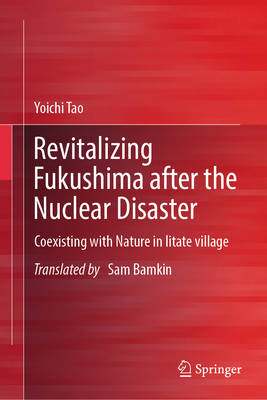
Revitalizing Fukushima After the Nuclear Disaster
Coexisting with Nature in Iitate Village
Yoichi Tao
Hardcover | Engels
€ 181,95
+ 363 punten
Omschrijving
This book tells the story of how residents of Iitate village and volunteers from across Japan came together to address the many complex issues that followed the Fukushima nuclear disaster.It outlines challenges faced by every rural village: producing the food and energy needed by unsustainable, increasingly disaster-prone cities; maintaining their rich cultures despite depopulation and aging, and having the autonomy of their communities removed by the centralisation of power in capital regions, especially in the wake of crisis. The disaster caused an unprecedented situation, never experienced in Fukushima, Japan or anywhere else. There were no real experts anywhere in the world with experience in such a revitalization project - and official successes were limited. Responsibility fell to the people, who independently initiated collaborative efforts to address not only issues of contamination monitoring and decontamination, but also complex issues of healthcare, agriculture, forestry, trade, business innovation, and ultimately the revitalization of livelihoods and the village community. The book takes a practical, every day, scientific and human approach to discuss how humans might once again co-exist with nature in the context of fundamental shifts in human civilization, learning from Iitate village. It serves as a model for 21st century local revitalization movements, pioneering ways to create new public spaces for action, to overcome problems of modernity and to move toward coexistence with nature. The work will appeal to disaster management experts, and students and scholars in disaster studies, city planning, environmental science, nuclear energy, Japan studies, international relations and sociology.
Specificaties
Betrokkenen
- Auteur(s):
- Vertaler(s):
- Uitgeverij:
Inhoud
- Aantal bladzijden:
- 138
- Taal:
- Engels
Eigenschappen
- Productcode (EAN):
- 9789819217496
- Verschijningsdatum:
- 28/07/2026
- Uitvoering:
- Hardcover
- Formaat:
- Genaaid
- Afmetingen:
- 155 mm x 235 mm


Alleen bij Standaard Boekhandel
+ 363 punten op je klantenkaart van Standaard Boekhandel
CADEAU

AANGERADEN


Beoordelingen
We publiceren alleen reviews die voldoen aan de voorwaarden voor reviews. Bekijk onze voorwaarden voor reviews.