


- Afhalen na 1 uur in een winkel met voorraad
- Gratis thuislevering in België vanaf € 30
- Ruim aanbod met 7 miljoen producten
- Afhalen na 1 uur in een winkel met voorraad
- Gratis thuislevering in België vanaf € 30
- Ruim aanbod met 7 miljoen producten





Omschrijving
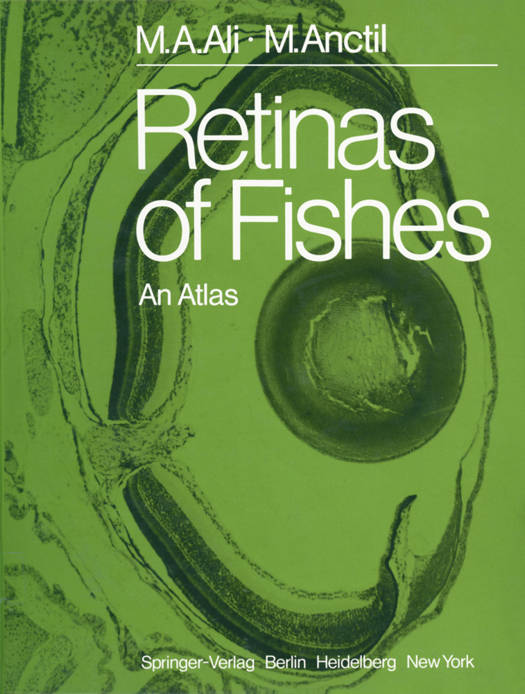
A considerable amount of information on the retinal morphology in fishes has been accumulating during the past century. Among the vertebrates, fishes are a highly successful group, both in number of species and in the adaptive radiation of forms. For instance, 415 teleost families are now recognised (GREENWOOD, ROSEN, WEITZMANN and MYERS, 1966), and the 20,000 odd fish species mentioned in text-books have been by far out numbered. The fish retina also shows considerable variations, in conformity with the extreme morphological diversification reached by piscine forms, in colonising all conceivable aquatic habitats and developing a wide spectrum of life habits. We intend to illustrate this in the present Atlas, a collection of short texts and photomicrographs of the retina from about one hundred fish families. This Atlas is intended also to fulfil other purposes. One of them is to present in a phylogenetic order the rather scattered data on fish retinal structure, with appropriate illustrative material; another is to assist the visual physiologist or biochemist in his search for a retina with particular morpholog- ical features compatible with his specific requirements. In other words, what we aim at is a ready pool of information for laymen, students, and specialists of varied interests. The material used for this Atlas comes from various sources.
Specificaties
Betrokkenen
- Auteur(s):
- Uitgeverij:
Inhoud
- Aantal bladzijden:
- 286
- Taal:
- Engels
Eigenschappen
- Productcode (EAN):
- 9783642664373
- Verschijningsdatum:
- 14/12/2011
- Uitvoering:
- Paperback
- Formaat:
- Trade paperback (VS)
- Afmetingen:
- 210 mm x 279 mm
- Gewicht:
- 689 g



Alleen bij Standaard Boekhandel
+ 290 punten op je klantenkaart van Standaard Boekhandel
CADEAU


Beoordelingen
We publiceren alleen reviews die voldoen aan de voorwaarden voor reviews. Bekijk onze voorwaarden voor reviews.