


- Afhalen na 1 uur in een winkel met voorraad
- Gratis thuislevering in België vanaf € 30
- Ruim aanbod met 7 miljoen producten
- Afhalen na 1 uur in een winkel met voorraad
- Gratis thuislevering in België vanaf € 30
- Ruim aanbod met 7 miljoen producten





€ 124,45
+ 248 punten
Uitvoering
Omschrijving
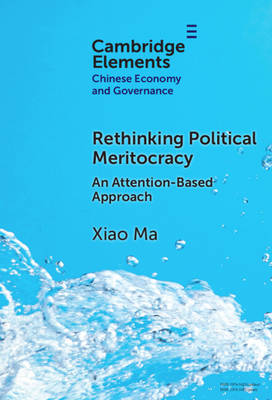
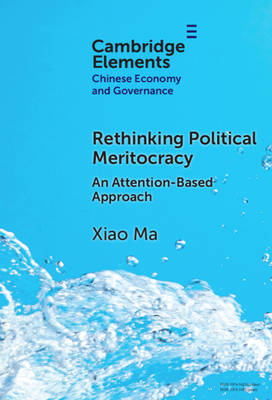
Political meritocracy, which selects and promotes officials based on their work performance, is an important explanation for China's rapid development. While prior studies focus on territorial leaders (kuai), less attention is given to functional department leaders (tiao), whose performance is harder to measure, attribute, or compare. This Element introduces an attention-based explanation, arguing that in China's complex bureaucratic system, marked by intricate divisions of labor and information asymmetry, capturing superiors' attention is critical for official's career advancement. Through case studies and analyses of original biographical data on functional department leaders, this Element reveals: 1) Promotion likelihood correlates with officials' ability to gain superiors' attention; 2) Not all attention-seeking behaviors align with governance goals, often fostering bureaucratic issues like formalism and over-implementation. This attention-based framework tries to reconcile debates on competence versus connections in Chinese political selection and explains both the bureaucratic system's successes and its governance challenges.
Specificaties
Betrokkenen
- Auteur(s):
- Uitgeverij:
Inhoud
- Aantal bladzijden:
- 75
- Taal:
- Engels
- Reeks:
Eigenschappen
- Productcode (EAN):
- 9781009502672
- Verschijningsdatum:
- 31/07/2026
- Uitvoering:
- Hardcover
- Formaat:
- Genaaid


Alleen bij Standaard Boekhandel
+ 248 punten op je klantenkaart van Standaard Boekhandel
Cadeau

AANGERADEN


Beoordelingen
We publiceren alleen reviews die voldoen aan de voorwaarden voor reviews. Bekijk onze voorwaarden voor reviews.