


- Afhalen na 1 uur in een winkel met voorraad
- Gratis thuislevering in België vanaf € 30
- Ruim aanbod met 7 miljoen producten
- Afhalen na 1 uur in een winkel met voorraad
- Gratis thuislevering in België vanaf € 30
- Ruim aanbod met 7 miljoen producten





€ 67,95
+ 135 punten
Omschrijving
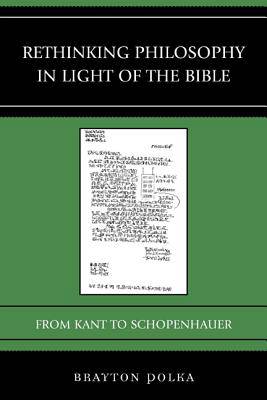
Rethinking Philosophy in Light of the Bible analyzes the ideas that are central to the philosophy of Kant, Hegel, and Kierkegaard in order to show that they are biblical in origin, both ontologically and historically. Brayton Polka argues that Schopenhauer has an altogether false conception of the fundamental ideas of the Bible--creation, the Fall of Adam and Eve, and covenantal love--and of Christianity, which leaves his philosophy irredeemably contradictory, as he himself acknowledges. The aim, then, is to show that our modern values, the values that constitute modernity, are biblical in origin. It is only when we come to understand that modernity is biblical from the beginning and that the Bible is modern unto the end that we are able to overcome the opposition, so evident today, between philosophy and theology, between reason and faith, and between the secular and the religious. Polka makes central the distinction that Kierkegaard draws between Christianity and Christendom: Christianity represents the coming into historical existence of the single individual; Christendom represents Christian values that are rationalized in pagan terms. As Kierkegaard shows us, if God has always existed eternally, then he has never existed eternally, then he has never come into historical existence for the single individual. The distinction between Christianity and Christendom is the distinction not between faith and reason, but between truth and idolatry. While theology and philosophy each represent the truth of Christianity, Schopenhauer's idolatrous concepts of faith, no less than of reason, represent Christendom.
Specificaties
Betrokkenen
- Auteur(s):
- Uitgeverij:
Inhoud
- Aantal bladzijden:
- 186
- Taal:
- Engels
- Reeks:
Eigenschappen
- Productcode (EAN):
- 9781498505796
- Verschijningsdatum:
- 28/03/2017
- Uitvoering:
- Paperback
- Formaat:
- Trade paperback (VS)
- Afmetingen:
- 150 mm x 229 mm
- Gewicht:
- 294 g


Alleen bij Standaard Boekhandel
+ 135 punten op je klantenkaart van Standaard Boekhandel
Cadeau

AANGERADEN


Beoordelingen
We publiceren alleen reviews die voldoen aan de voorwaarden voor reviews. Bekijk onze voorwaarden voor reviews.