


- Afhalen na 1 uur in een winkel met voorraad
- Gratis thuislevering in België vanaf € 30
- Ruim aanbod met 7 miljoen producten
- Afhalen na 1 uur in een winkel met voorraad
- Gratis thuislevering in België vanaf € 30
- Ruim aanbod met 7 miljoen producten





€ 47,45
+ 94 punten
Uitvoering
Omschrijving
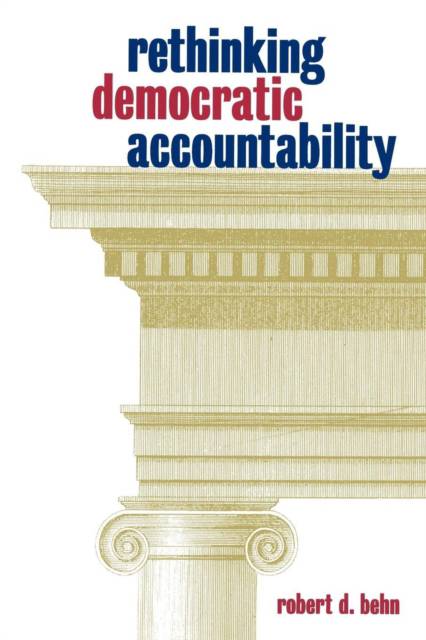
Traditionally, American government has created detailed, formal procedures to ensure that its agencies and employees are accountable for finances and fairness. Now in the interest of improved performance, we are asking our front-line workers to be more responsive, we are urging our middle managers to be innovative, and we are exhorting our public executives to be entrepreneurial. Yet what is the theory of democratic accountability that empowers public employees to exercise such discretion while still ensuring that we remain a government of laws? How can government be responsive to the needs of individual citizens and still remain accountable to the entire polity? In Rethinking Democratic Accountability, Robert D. Behn examines the ambiguities, contradictions, and inadequacies in our current systems of accountability for finances, fairness, and performance. Weaving wry observations with political theory, Behn suggests a new model of accountability--with ""compacts of collective, mutual responsibility""--to address new paradigms for public management.
Specificaties
Betrokkenen
- Auteur(s):
- Uitgeverij:
Inhoud
- Aantal bladzijden:
- 328
- Taal:
- Engels
Eigenschappen
- Productcode (EAN):
- 9780815708612
- Verschijningsdatum:
- 1/03/2001
- Uitvoering:
- Paperback
- Formaat:
- Trade paperback (VS)
- Afmetingen:
- 152 mm x 229 mm
- Gewicht:
- 480 g


Alleen bij Standaard Boekhandel
+ 94 punten op je klantenkaart van Standaard Boekhandel
Cadeau

AANGERADEN


Beoordelingen
We publiceren alleen reviews die voldoen aan de voorwaarden voor reviews. Bekijk onze voorwaarden voor reviews.