


- Afhalen na 1 uur in een winkel met voorraad
- Gratis thuislevering in België vanaf € 30
- Ruim aanbod met 7 miljoen producten
- Afhalen na 1 uur in een winkel met voorraad
- Gratis thuislevering in België vanaf € 30
- Ruim aanbod met 7 miljoen producten





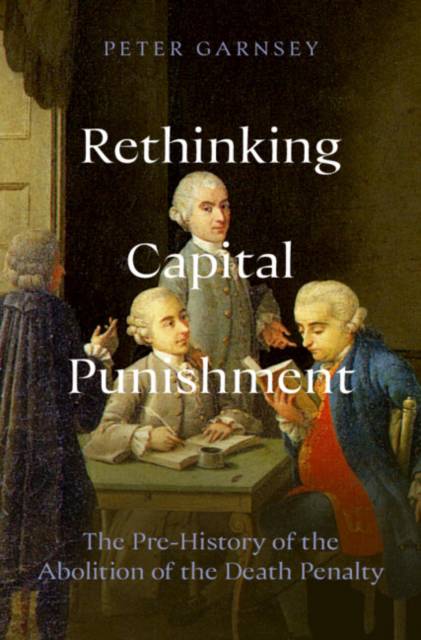
Rethinking Capital Punishment
The Pre-History of the Abolition of the Death Penalty
Peter Garnsey
Hardcover | Engels
€ 40,95
+ 81 punten
Omschrijving
The death penalty was accepted almost universally until the eighteenth century, when Giuseppe Pelli of Florence and Cesare Beccaria of Milan produced works calling for its abolition. Why was this form of punishment so integrated into laws and customary practices? And what is the pre-history of the arguments in favour of its abolition? This book is the first to trace the origins of these ideas, beginning with the Lex Talionis in the Code of Hammurabi and moving across the Bible, Plato, to the Renaissance, and the emergence of utilitarianism in the 18th century. It also explores how the advance of the abolition of the death penalty was held up for a time in Britain, and stalled, apparently permanently, in America. Peter Garnsey ranges across philosophy, theology, law, and politics to provide a balanced and accessible overview of the beliefs about crime and punishment that underlay the arguments of the first abolitionists. This study is a compelling and original contribution to the history of ideas about capital punishment.
Specificaties
Betrokkenen
- Auteur(s):
- Uitgeverij:
Inhoud
- Aantal bladzijden:
- 202
- Taal:
- Engels
Eigenschappen
- Productcode (EAN):
- 9781009760096
- Verschijningsdatum:
- 2/04/2026
- Uitvoering:
- Hardcover
- Formaat:
- Genaaid
- Afmetingen:
- 152 mm x 229 mm
- Gewicht:
- 439 g


Alleen bij Standaard Boekhandel
+ 81 punten op je klantenkaart van Standaard Boekhandel
Cadeau

AANGERADEN


Beoordelingen
We publiceren alleen reviews die voldoen aan de voorwaarden voor reviews. Bekijk onze voorwaarden voor reviews.