


- Afhalen na 1 uur in een winkel met voorraad
- Gratis thuislevering in België vanaf € 30
- Ruim aanbod met 7 miljoen producten
- Afhalen na 1 uur in een winkel met voorraad
- Gratis thuislevering in België vanaf € 30
- Ruim aanbod met 7 miljoen producten





Omschrijving
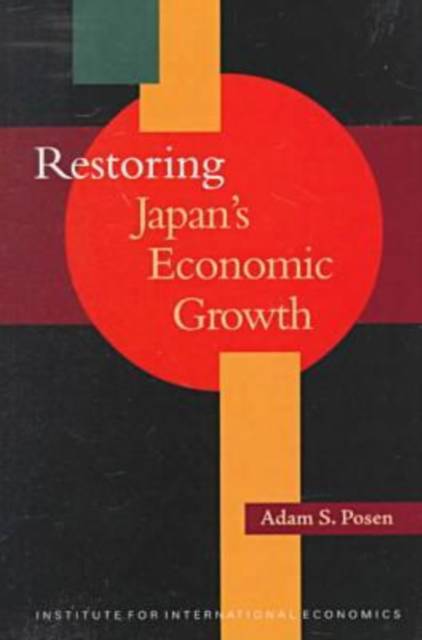
Will the Japanese government take the decisive but manageable policy actions needed to bring about economic recovery? Despite claims to the contrary, macroeconomic expansion has yet to be seriously tried in Japan. Criticism of current Japanese macroeconomic and financial policies is so widespread that the reasons for it are assumed to be self-evident. In this volume, Adam Posen explains in depth why a shift in Japanese fiscal and monetary policies, as well as financial reform, would be in Japan's own self-interest. He demonstrates that Japanese economic stagnation in the 1990s is the result of mistaken fiscal austerity and financial laissez-faire rather than any supposed structural failures of the "Japan Model." The author outlines a program for putting the country back on the path to solid economic growth--primarily through permanent tax cuts and monetary stabilization--and draws broader lessons to be learned from the recent Japanese policy actions that led to the country's continuing stagnation. The book will be a useful supplementary text for both undergraduate and postgraduate courses in macroeconomics, comparative political economy, Japan or East Asian studies, public finance, and international relations.
Specificaties
Betrokkenen
- Auteur(s):
- Uitgeverij:
Inhoud
- Aantal bladzijden:
- 214
- Taal:
- Engels
Eigenschappen
- Productcode (EAN):
- 9780881322620
- Verschijningsdatum:
- 1/09/1998
- Uitvoering:
- Paperback
- Formaat:
- Trade paperback (VS)
- Afmetingen:
- 154 mm x 230 mm
- Gewicht:
- 308 g


Alleen bij Standaard Boekhandel
+ 84 punten op je klantenkaart van Standaard Boekhandel
AANGERADEN


Beoordelingen
We publiceren alleen reviews die voldoen aan de voorwaarden voor reviews. Bekijk onze voorwaarden voor reviews.