


- Afhalen na 1 uur in een winkel met voorraad
- Gratis thuislevering in België vanaf € 30
- Ruim aanbod met 7 miljoen producten
- Afhalen na 1 uur in een winkel met voorraad
- Gratis thuislevering in België vanaf € 30
- Ruim aanbod met 7 miljoen producten





€ 404,45
+ 808 punten
Omschrijving
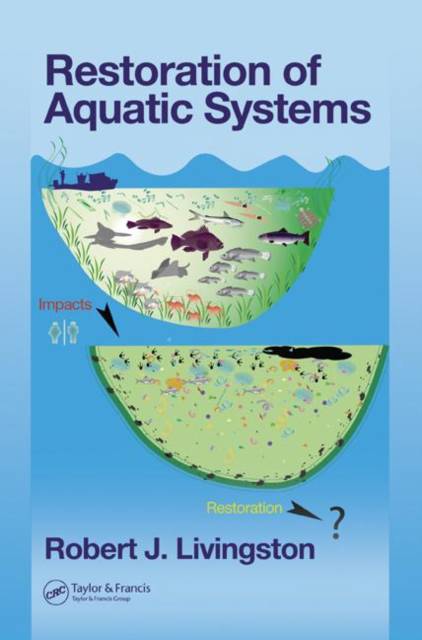
Simplistic thinking would have us believe that by eliminating the loading of a given pollutant, an aquatic system will revert to its previous pristine state. This premise is without scientific verification. Besides the fact that typically very little documentation exists defining what exactly that previous pristine state was, it should be noted that biological processes are non-linear. They reflect adaptations by populations and corresponding responses of trophic organization that are not predictable by linear models of recovery. Restoration of Aquatic Systems makes a clear delineation between genuine restoration and public perception of restoration efforts. Written by Robert Livingston, one of the foremost international authorities on ecosystem studies of freshwater, estuarine, and marine environments, this work is the final volume of a trilogy derived from 70 field-years of data garnered from 10 different coastal systems on the Atlantic and Gulf coasts. The text provides a synthetic look at the restoration of aquatic systems, emphasizing the functional basis that supports such activities, followed by a review of the evidence of recovery. Livingston considers numerous cases of scientific restoration; however, while the first two volumes could be considered pure science, this volume brings into play the impact of political as well as economic interests and where appropriate, media leverage. This work is thus concerned with just how effective the restoration process becomes as a product of a complex mixture of competing interests. From this effort, an interdisciplinary comparative database has been created that is currently being published in a series of books and peer-reviewed scientific journals. This work is used to evaluate system-level processes that determine the effects of nutrient loading and nutrient dynamics on phytoplankton/benthic macrophyte productivity and associated food web responses.
Specificaties
Betrokkenen
- Auteur(s):
- Uitgeverij:
Inhoud
- Aantal bladzijden:
- 444
- Taal:
- Engels
- Reeks:
Eigenschappen
- Productcode (EAN):
- 9780849319662
- Verschijningsdatum:
- 11/07/2005
- Uitvoering:
- Hardcover
- Formaat:
- Genaaid
- Afmetingen:
- 182 mm x 263 mm
- Gewicht:
- 961 g



Alleen bij Standaard Boekhandel
+ 808 punten op je klantenkaart van Standaard Boekhandel
Cadeau

AANGERADEN


Beoordelingen
We publiceren alleen reviews die voldoen aan de voorwaarden voor reviews. Bekijk onze voorwaarden voor reviews.