


- Afhalen na 1 uur in een winkel met voorraad
- Gratis thuislevering in België vanaf € 30
- Ruim aanbod met 7 miljoen producten
- Afhalen na 1 uur in een winkel met voorraad
- Gratis thuislevering in België vanaf € 30
- Ruim aanbod met 7 miljoen producten





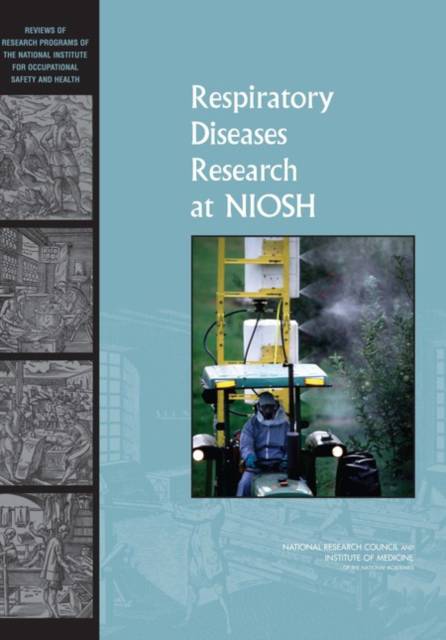
Respiratory Diseases Research at Niosh
Reviews of Research Programs of the National Institute for Occupational Safety and Health
Institute of Medicine, National Research Council, Division on Earth and Life Studies, Board on Environmental Studies and Toxicology, Committee to Review the Niosh Respiratory Disease Research Progr
Paperback | Engels
€ 99,45
+ 198 punten
Omschrijving
Respiratory diseases caused by exposures to dangerous materials in the workplace have tremendous implications for worker health and, by extension, the national economy. The National Institute for Occupational Safety and Health (NIOSH) estimates that deaths from work-related respiratory diseases and cancers account for about 70% of all occupational disease deaths. NIOSH conducts research in order to detect and reduce work-related hazardous exposures, injuries, and diseases; its Respiratory Disease Research Program (RDRP) focuses on respiratory diseases. This National Research Council book reviews the RDRP to evaluate the 1) relevance of its work to improvements in occupational safety and health and 2) the impact of research in reducing workplace respiratory illnesses. The assessment reveals that the program has made essential contributions to preventing occupational respiratory disease. The National Research Council has rated the Program a 5 out of 5 for relevance, and a 4 out of 5 for impact. To further increase its effectiveness, the Respiratory Disease Research Program should continue and expand its current efforts, provide resources for occupational disease surveillance, and include exposure assessment scientists in its activities.
Specificaties
Betrokkenen
- Auteur(s):
- Uitgeverij:
Inhoud
- Aantal bladzijden:
- 250
- Taal:
- Engels
Eigenschappen
- Productcode (EAN):
- 9780309118736
- Verschijningsdatum:
- 7/08/2008
- Uitvoering:
- Paperback
- Formaat:
- Trade paperback (VS)
- Afmetingen:
- 178 mm x 254 mm
- Gewicht:
- 301 g


Alleen bij Standaard Boekhandel
+ 198 punten op je klantenkaart van Standaard Boekhandel
AANGERADEN


Beoordelingen
We publiceren alleen reviews die voldoen aan de voorwaarden voor reviews. Bekijk onze voorwaarden voor reviews.