


- Afhalen na 1 uur in een winkel met voorraad
- Gratis thuislevering in België vanaf € 30
- Ruim aanbod met 7 miljoen producten
- Afhalen na 1 uur in een winkel met voorraad
- Gratis thuislevering in België vanaf € 30
- Ruim aanbod met 7 miljoen producten





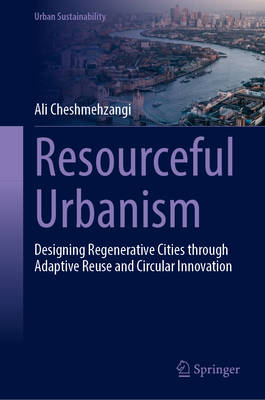
Resourceful Urbanism
Designing Regenerative Cities Through Adaptive Reuse and Circular Innovation
Ali Cheshmehzangi
€ 274,95
+ 549 punten
Omschrijving
Resourceful Urbanism reimagines how cities can thrive through constraints, whether environmental, economic, or spatial, by harnessing ingenuity, local knowledge, and innovative design. This book focuses on how adaptive reuse, circular thinking, and participatory governance might lead to urban resilience rather than high-tech fixes or significant advancements. It makes the case that being "resourceful" in the urban context means changing our values for things like relationships, materials, ecosystems, and lived experience in addition to getting more done with less. The transformative tactics that influence the urban futures of both Global North and Global South contexts are examined in this book in a current and fact-based manner. It combines several approaches, i.e., formal and informal, grassroots and institutional, to show how locally rooted activities may make cities more regenerative, inclusive, and adaptable. The book is structured around four central themes that collectively define resourceful urbanism: "Community-Led Innovation", "Adaptive Reuse and Retrofitting", "Circular Resource Management", and "Multifunctional Urban Spaces". Each theme is illustrated through two in-depth case studies, one from a developed context and one from a developing context, showing how contextually tailored interventions can drive systemic transformation.
Specificaties
Betrokkenen
- Auteur(s):
- Uitgeverij:
Inhoud
- Aantal bladzijden:
- 155
- Taal:
- Engels
- Reeks:
Eigenschappen
- Productcode (EAN):
- 9789819541379
- Verschijningsdatum:
- 31/10/2025
- Uitvoering:
- Hardcover
- Formaat:
- Genaaid
- Afmetingen:
- 163 mm x 237 mm
- Gewicht:
- 417 g


Alleen bij Standaard Boekhandel
+ 549 punten op je klantenkaart van Standaard Boekhandel
Cadeau

AANGERADEN


Beoordelingen
We publiceren alleen reviews die voldoen aan de voorwaarden voor reviews. Bekijk onze voorwaarden voor reviews.