


- Afhalen na 1 uur in een winkel met voorraad
- Gratis thuislevering in België vanaf € 30
- Ruim aanbod met 7 miljoen producten
- Afhalen na 1 uur in een winkel met voorraad
- Gratis thuislevering in België vanaf € 30
- Ruim aanbod met 7 miljoen producten





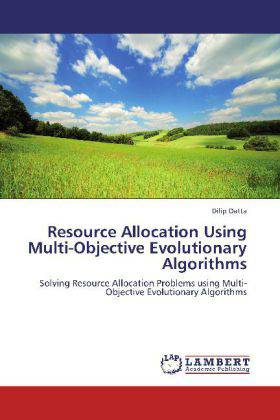
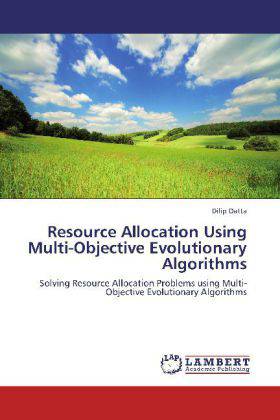
Resource Allocation Using Multi-Objective Evolutionary Algorithms
Solving Resource Allocation Problems using Multi-Objective Evolutionary Algorithms
Dilip Datta
Paperback | Engels
€ 77,95
+ 155 punten
Omschrijving
A resource allocation problem (RAP) is encountered in a variety of areas in operations research and management science. It is a combinatorial optimization problem, where a limited amount of resources are to be allocated to certain number of competitive events in order to achieve the most effective allotment of the resources. Although the properties of an RAP can help in characterizing another RAP, different RAPs are usually studied independently without exploring the similarities among them. Therefore, with the aim of exploring the similarities among different types of RAPs, two versions of NSGA-II, a well-known multi-objective evolutionary algorithm, are developed as the solution techniques for two challenging RAPs of quite different natures, namely the university class timetabling problem and the land-use management problem. Finally, the similarities between the problems, as well as between their solution techniques, are analyzed through a number of case studies under multiple objectives and different sets of hard and soft constraints.
Specificaties
Betrokkenen
- Auteur(s):
- Uitgeverij:
Inhoud
- Aantal bladzijden:
- 216
- Taal:
- Engels
Eigenschappen
- Productcode (EAN):
- 9783848441358
- Verschijningsdatum:
- 23/04/2012
- Uitvoering:
- Paperback
- Afmetingen:
- 152 mm x 220 mm
- Gewicht:
- 322 g


Alleen bij Standaard Boekhandel
+ 155 punten op je klantenkaart van Standaard Boekhandel
Cadeau

AANGERADEN


Beoordelingen
We publiceren alleen reviews die voldoen aan de voorwaarden voor reviews. Bekijk onze voorwaarden voor reviews.