


Bedankt voor het vertrouwen het afgelopen jaar! Om jou te bedanken bieden we GRATIS verzending (in België) aan op alles gedurende de hele maand januari.
- Afhalen na 1 uur in een winkel met voorraad
- In januari gratis thuislevering in België
- Ruim aanbod met 7 miljoen producten
Bedankt voor het vertrouwen het afgelopen jaar! Om jou te bedanken bieden we GRATIS verzending (in België) aan op alles gedurende de hele maand januari.
- Afhalen na 1 uur in een winkel met voorraad
- In januari gratis thuislevering in België
- Ruim aanbod met 7 miljoen producten




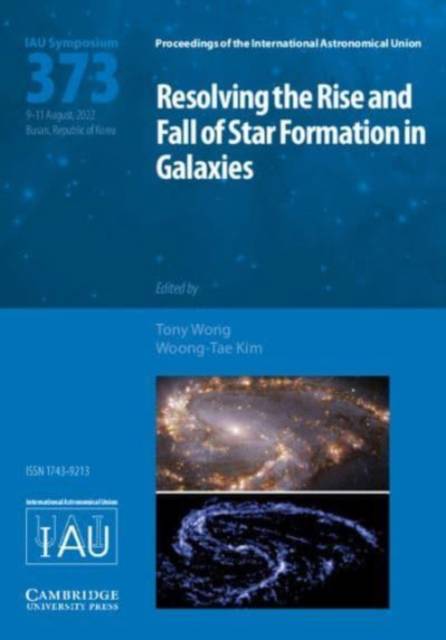
Resolving the Rise and Fall of Star Formation in Galaxies (Iau S373)
€ 187,45
+ 374 punten
Omschrijving
Star formation is relevant to nearly every area of astrophysics, from planetary science to galaxy evolution, yet the physical processes that determine the rates of star formation and its spatial and temporal distribution are still poorly understood. IAU Symposium 373 focuses on the impact that resolved studies of galaxies, both observational and theoretical, are having on the understanding of star formation on all scales. It highlights the latest advances in understanding star formation in its galactic context and how it drives galaxy evolution. A key advance has been the ability to spatially resolve the sub-kiloparsec scales on which star formation relations are established, bridging the gap between resolved studies in the local neighborhood and large-scale galaxy surveys. Alongside this, a new generation of cosmological simulations have helped to interpret these new data, providing new techniques for confronting them with observations. This volume shares these developments, for graduate students and researchers.
Specificaties
Betrokkenen
- Uitgeverij:
Inhoud
- Aantal bladzijden:
- 300
- Taal:
- Engels
- Reeks:
Eigenschappen
- Productcode (EAN):
- 9781009352956
- Verschijningsdatum:
- 3/08/2023
- Uitvoering:
- Hardcover
- Formaat:
- Genaaid
- Afmetingen:
- 170 mm x 246 mm
- Gewicht:
- 498 g

Alleen bij Standaard Boekhandel
+ 374 punten op je klantenkaart van Standaard Boekhandel
SOLDEN


Beoordelingen
We publiceren alleen reviews die voldoen aan de voorwaarden voor reviews. Bekijk onze voorwaarden voor reviews.