


- Afhalen na 1 uur in een winkel met voorraad
- Gratis thuislevering in België vanaf € 30
- Ruim aanbod met 7 miljoen producten
- Afhalen na 1 uur in een winkel met voorraad
- Gratis thuislevering in België vanaf € 30
- Ruim aanbod met 7 miljoen producten





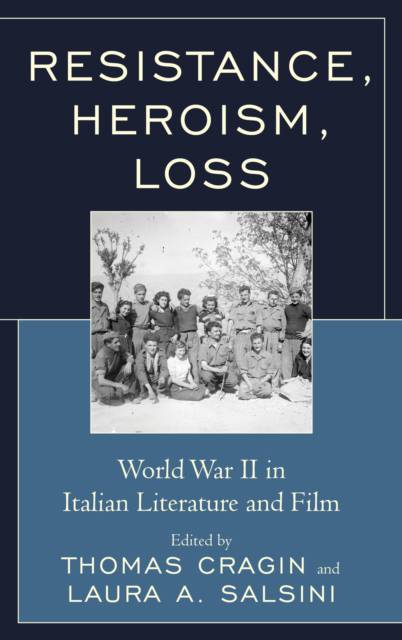
Resistance, Heroism, Loss
World War II in Italian Literature and Film
€ 195,45
+ 390 punten
Omschrijving
In no other country in Europe has national identity been so closely bound to memories of the war. Italy's Republic was born of World War II, its constitution defined by anti-Fascism, its parties self-identified with national Resistance. Because of their importance to the nation's identity, the nature and meaning of the war have been the focus of great contention, from 1943 to the present day. In recent years Italy has taken on a national evaluation of the more troubling and contested aspects of its role in the war, including its support of Fascism and collaboration after 1943, its treatment of Jews and other minorities, deep national divisions that created a civil war between 1943 and 1945, and the centrality of war myth to lingering postwar problems. Scholars of Italian history, literature, and cinema play a fundamental role in this appraisal, and this volume of essays attests to the importance of film and literature to the ways in which changing political, social and cultural imperatives have altered the war's memory. These articles expand our understanding of the shifting phases in national memory by highlighting significant features of each era's portrayal of the war. Contributions come from eight scholars who capture the full variety of disciplinary and sub-disciplinary approaches that are current today, including film genre studies, cultural history, gender studies, Holocaust studies, and the very new fields of emotion studies, shame theory, and environmental studies. Their innovative application of questions and methods that speak to important new subfields in Italian Studies make this volume an invaluable tool for scholars and their students.
Specificaties
Betrokkenen
- Uitgeverij:
Inhoud
- Aantal bladzijden:
- 200
- Taal:
- Engels
- Reeks:
Eigenschappen
- Productcode (EAN):
- 9781683931379
- Verschijningsdatum:
- 20/02/2018
- Uitvoering:
- Hardcover
- Formaat:
- Genaaid
- Afmetingen:
- 157 mm x 231 mm
- Gewicht:
- 498 g


Alleen bij Standaard Boekhandel
+ 390 punten op je klantenkaart van Standaard Boekhandel
Cadeau

AANGERADEN


Beoordelingen
We publiceren alleen reviews die voldoen aan de voorwaarden voor reviews. Bekijk onze voorwaarden voor reviews.