


- Afhalen na 1 uur in een winkel met voorraad
- Gratis thuislevering in België vanaf € 30
- Ruim aanbod met 7 miljoen producten
- Afhalen na 1 uur in een winkel met voorraad
- Gratis thuislevering in België vanaf € 30
- Ruim aanbod met 7 miljoen producten





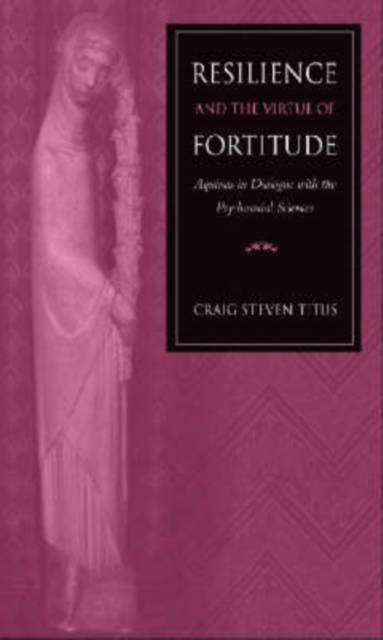
Resilience and the Virtue of Fortitude Aquinas in Dialogue with the Psychosocial Sciences
Aquinas in Dialogue with the Psychosocial Sciences
Craig Steven Titus
Hardcover | Engels
€ 96,95
+ 193 punten
Eenvoudig bestellen
Veilig betalen


Gratis thuislevering vanaf € 30 (via bpost)
Gratis levering in je Standaard Boekhandel
Omschrijving
Empirical research and virtue ethics find a fitting match in their respective studies of resilience and fortitude. The concept of resilience involves personal and social capacities to cope with difficulty, resist destruction under hardship, and construct something positive out of an otherwise negative situation. Although the concept is new, the human phenomenon is ancient. It has been attested to for millennia by poets, philosophers, and spiritual writers who have praised it in the language of the virtues. In addition to examining empirical resilience research, this book offers--at philosophical and theological levels--a basis for a hearty understanding of the human person in terms of the virtues that enable human beings to overcome difficulty when they are faced with fear and suffering, or when they are in need of imaginative daring and hope. The primary such virtue is fortitude. The present study employs the thought of Thomas Aquinas and his sources on fortitude and its related virtues, while taking his dialogal method as a basis for critically appropriating reflections from other perspectives as well. The book offers a renewed, classic vision of the human person and the ordering of the sciences as read through the complementary and, at one level, corrective insights of empirical psychosocial studies on resilience. Such a vibrant natural-law approach to ethical norms and moral development offers guidelines and a framework for understanding human resilience. Moreover, it recognizes a theological transformation of such human capacities--a spiritual resilience--by proposing the New Law of grace, Christ's teaching, and the infused virtues as vital bases for Christian ethics.
Specificaties
Betrokkenen
- Auteur(s):
- Uitgeverij:
Inhoud
- Aantal bladzijden:
- 426
- Taal:
- Engels
Eigenschappen
- Productcode (EAN):
- 9780813214634
- Verschijningsdatum:
- 1/11/2006
- Uitvoering:
- Hardcover
- Formaat:
- Genaaid
- Afmetingen:
- 163 mm x 233 mm
- Gewicht:
- 848 g


Alleen bij Standaard Boekhandel
+ 193 punten op je klantenkaart van Standaard Boekhandel
CADEAU

AANGERADEN


Beoordelingen
We publiceren alleen reviews die voldoen aan de voorwaarden voor reviews. Bekijk onze voorwaarden voor reviews.