


- Afhalen na 1 uur in een winkel met voorraad
- Gratis thuislevering in België vanaf € 30
- Ruim aanbod met 7 miljoen producten
- Afhalen na 1 uur in een winkel met voorraad
- Gratis thuislevering in België vanaf € 30
- Ruim aanbod met 7 miljoen producten





€ 257,95
+ 515 punten
Uitvoering
Omschrijving
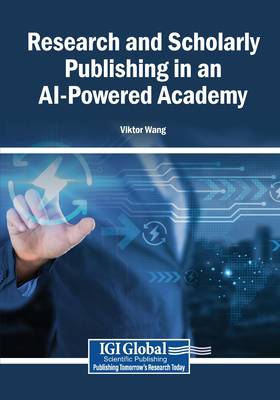
Artificial intelligence (AI) has rapidly reshaped research and scholarly publishing, becoming an indispensable tool for researchers, writers, and editors in areas such as verification, documentation, authorship transparency, and data governance. Yet the widespread adoption of these technologies has also introduced new forms of ethical risk across the academic publishing landscape. When used responsibly, AI is a transformative asset, capable of streamlining the research process by analyzing complex data sets, synthesizing existing literature, and providing administrative and workflow support. However, the pace of its integration has outstripped the development of standardized guidelines and clear best practices. As a result, there is an urgent need for research that equips scholars with practical, field-specific guidance for conducting rigorous, ethical, and efficient research in an AI enhanced academic environment. Such work is essential not only for preserving research integrity, but also for ensuring that AI's benefits are realized without compromising the values at the core of scholarly inquiry. Research and Scholarly Publishing in an AI-Powered Academy advances ethical and transparent AI use by providing clear standards for output verification, documentation practices, authorship attribution, and data management. The book addresses common vulnerabilities in AI assisted research by outlining repeatable, high quality control workflows. In doing so, it enhances methodological rigor, improves the reliability of literature reviews and empirical claims, and supports more efficient and trustworthy knowledge production. Covering topics such as ghost authors, contribution statements, and patchwriting, this book is an excellent academic resource for graduate and doctoral students, professors, lecturers, research-focused practitioners, writing centers, and more.
Specificaties
Betrokkenen
- Auteur(s):
- Uitgeverij:
Inhoud
- Aantal bladzijden:
- 520
- Taal:
- Engels
Eigenschappen
- Productcode (EAN):
- 9798337393414
- Verschijningsdatum:
- 19/03/2026
- Uitvoering:
- Paperback
- Formaat:
- Trade paperback (VS)
- Afmetingen:
- 178 mm x 254 mm
- Gewicht:
- 893 g


Alleen bij Standaard Boekhandel
+ 515 punten op je klantenkaart van Standaard Boekhandel
Cadeau

AANGERADEN


Beoordelingen
We publiceren alleen reviews die voldoen aan de voorwaarden voor reviews. Bekijk onze voorwaarden voor reviews.