


- Afhalen na 1 uur in een winkel met voorraad
- Gratis thuislevering in België vanaf € 30
- Ruim aanbod met 7 miljoen producten
- Afhalen na 1 uur in een winkel met voorraad
- Gratis thuislevering in België vanaf € 30
- Ruim aanbod met 7 miljoen producten





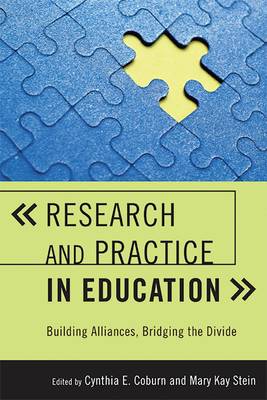
Research and Practice in Education
Building Alliances, Bridging the Divide
Cynthia E Coburn, Mary Kay Stein
Paperback | Engels
€ 135,95
+ 271 punten
Uitvoering
Eenvoudig bestellen
Veilig betalen


Gratis thuislevering vanaf € 30 (via bpost)
Gratis levering in je Standaard Boekhandel
Omschrijving
That there is a divide between research and practice is a common lament across policy-oriented disciplines, and education is no exception. Rhetoric abounds about the role research plays (or does not play) in the improvement of schools and classrooms, and policy makers push solutions that are rooted in assumptions about the way that research should influence practice. Yet few people have studied the relationship between research and practice empirically. This book presents findings from a series of interlocking case studies of nationally visible R&D projects, with a unique focus on how researchers and practitioners actually worked together, and the policy, social, and institutional processes that either enabled or hindered their work. The book investigates the dynamics of cross-institutional collaboration and the relationship between tool design, teacher learning, and the implementation of research-based approaches. It also explores conditions for learning in schools and the role of evidence in district decision making. By investigating the roles played by research and practice in these ten educational improvement efforts, the book illuminates lessons for those who seek to do this kind of work in the future. It concludes by suggesting implications for designers, funders, school and district leaders, and universities.
Specificaties
Betrokkenen
- Auteur(s):
- Uitgeverij:
Inhoud
- Aantal bladzijden:
- 256
- Taal:
- Engels
Eigenschappen
- Productcode (EAN):
- 9780742564077
- Verschijningsdatum:
- 16/04/2010
- Uitvoering:
- Paperback
- Formaat:
- Trade paperback (VS)
- Afmetingen:
- 147 mm x 224 mm
- Gewicht:
- 408 g


Alleen bij Standaard Boekhandel
+ 271 punten op je klantenkaart van Standaard Boekhandel
CADEAU

AANGERADEN


Beoordelingen
We publiceren alleen reviews die voldoen aan de voorwaarden voor reviews. Bekijk onze voorwaarden voor reviews.