


- Afhalen na 1 uur in een winkel met voorraad
- Gratis thuislevering in België vanaf € 30
- Ruim aanbod met 7 miljoen producten
- Afhalen na 1 uur in een winkel met voorraad
- Gratis thuislevering in België vanaf € 30
- Ruim aanbod met 7 miljoen producten





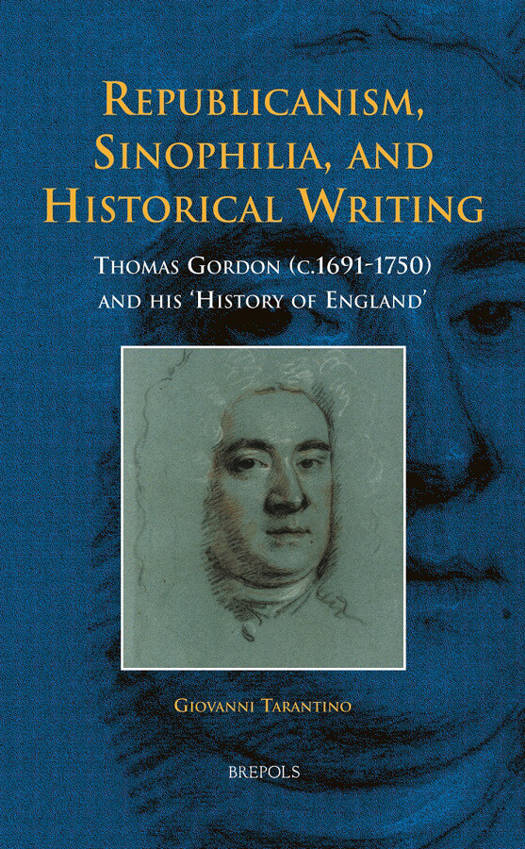
Republicanism, Sinophilia, and Historical Writing
Thomas Gordon (C.1691-1750) and His 'History of England'
Giovanni Tarantino
€ 164,30
+ 328 punten
Omschrijving
Thomas Gordon (c.1691-1750) was a prolific Scottish journalist and pamphleteer working in eighteenth-century London. His works circulated in a variety of forms and for many years in Europe and the British North American colonies. Gordon's conception of 'republicanism' was essentially that of a secular and tolerant society free from providential designs; his works reflected a lifelong commitment to defending the rule of law, the balance of powers, and the rotation of representative bodies. This study sets out to produce a fuller profile of Gordon, to investigate his specific and controversial contribution as a political theorist, and finally to present for the first time an annotated edition of his unfinished and unpublished (mainlymedieval) History of England: a highly readable text whose main metanarrative theme is the struggle between 'the Government of Will' and 'the Government of Laws'- with the struggle between 'God's Will' and 'the Will of the Clergy' as an essential rhetorical subtheme. The book also deals with a hitherto unexplored aspect of Gordon's thinking, his Sinophilia. Gordon's 'sensible Chinese' is drawn in as a rhetorical tool to voice bitter judgements on both Catholic and Protestant inconsistencies. By resorting to the utopian model of a distant Orient, Gordon aimed to expose the severe impact on Western societies of clerical interference in State affairs, concluding that 'men who are oppressed, or who foresee inevitable oppression, will be naturally thinking of the means of security and escape', or possibly dreaming about distant civilizations.
Specificaties
Betrokkenen
- Auteur(s):
- Uitgeverij:
Inhoud
- Aantal bladzijden:
- 652
- Taal:
- Engels
- Reeks:
- Reeksnummer:
- nr. 4
Eigenschappen
- Productcode (EAN):
- 9782503536842
- Verschijningsdatum:
- 5/02/2013
- Uitvoering:
- Hardcover
- Formaat:
- Genaaid
- Afmetingen:
- 156 mm x 234 mm
- Gewicht:
- 1192 g


Alleen bij Standaard Boekhandel
+ 328 punten op je klantenkaart van Standaard Boekhandel
AANGERADEN


Beoordelingen
We publiceren alleen reviews die voldoen aan de voorwaarden voor reviews. Bekijk onze voorwaarden voor reviews.