


- Afhalen na 1 uur in een winkel met voorraad
- Gratis thuislevering in België vanaf € 30
- Ruim aanbod met 7 miljoen producten
- Afhalen na 1 uur in een winkel met voorraad
- Gratis thuislevering in België vanaf € 30
- Ruim aanbod met 7 miljoen producten





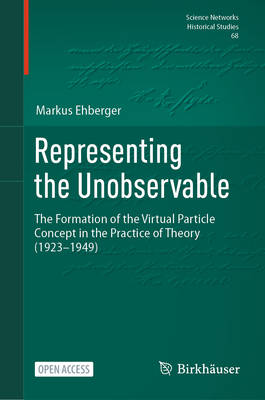
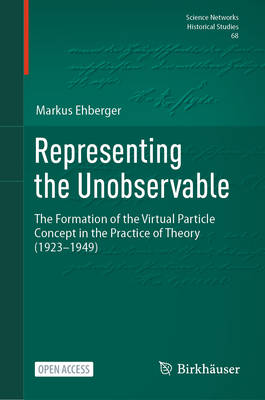
Representing the Unobservable
The Formation of the Virtual Particle Concept in the Practice of Theory (1923-1949)
Markus Ehberger
€ 54,45
+ 108 punten
Omschrijving
This open access book examines the historical development of the concept of the virtual particle, from the first prominent appearance of virtual entities in quantum physics in the Bohr-Kramers-Slater (BKS) theory (1924) to the most common representation of virtual particles in Feynman diagrams (1949). Through a pragmatically informed approach to concept formation, focusing on the different representations of virtual entities and their role in theoretical practice, this work unravels the (dis)connections between the concepts of "virtual oscillators" (early 1920s), "virtual transitions" (the late 1920s to mid-1940s), and, finally, "virtual particles" (mid-1930s to late 1940s). The shifts and continuities in the conceptual development must be understood within the broader transformation of the theoretical framework, from the so-called Old Quantum Theory to the emergence of quantum electrodynamics (QED) and quantum field theory of the 1930s, culminating in the reconfiguration of the practice of QED in the hands of Richard Feynman in the late 1940s. A key pragmatically informed feature uniting these concepts is their shared function: they extended the set of possible processes and rendered these possibilities effective. This book will be of interest to historians and philosophers of physics and mathematics.
Specificaties
Betrokkenen
- Auteur(s):
- Uitgeverij:
Inhoud
- Aantal bladzijden:
- 581
- Taal:
- Engels
- Reeks:
- Reeksnummer:
- nr. 68
Eigenschappen
- Productcode (EAN):
- 9783032091871
- Verschijningsdatum:
- 24/01/2026
- Uitvoering:
- Hardcover
- Formaat:
- Genaaid
- Afmetingen:
- 156 mm x 234 mm
- Gewicht:
- 1020 g


Alleen bij Standaard Boekhandel
+ 108 punten op je klantenkaart van Standaard Boekhandel
Cadeau

AANGERADEN


Beoordelingen
We publiceren alleen reviews die voldoen aan de voorwaarden voor reviews. Bekijk onze voorwaarden voor reviews.