


- Afhalen na 1 uur in een winkel met voorraad
- Gratis thuislevering in België vanaf € 30
- Ruim aanbod met 7 miljoen producten
- Afhalen na 1 uur in een winkel met voorraad
- Gratis thuislevering in België vanaf € 30
- Ruim aanbod met 7 miljoen producten





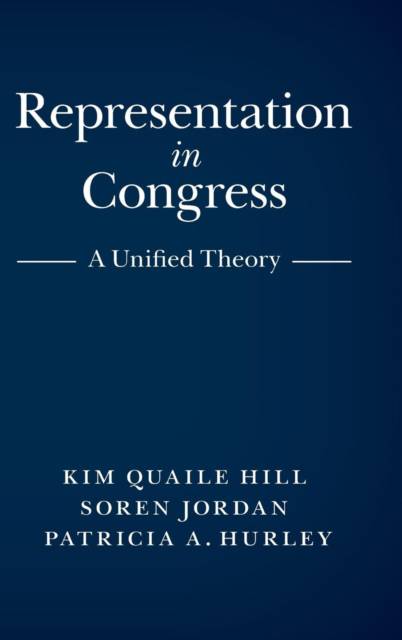
Representation in Congress
A Unified Theory
Kim Quaile Hill, Soren Jordan, Patricia A Hurley
Hardcover | Engels
€ 181,95
+ 363 punten
Eenvoudig bestellen
Veilig betalen


Gratis thuislevering vanaf € 30 (via bpost)
Gratis levering in je Standaard Boekhandel
Omschrijving
Representation in Congress provides a theory of dyadic policy representation intended to account for when belief sharing, delegate, responsible party, trustee, and "party elite led" models of representational linkage arise on specific policy issues. The book also presents empirical tests of most of the fundamental predictions for when such alternative models appear, and it presents tests of novel implications of the theory about other aspects of legislative behavior. Some of the latter tests resolve contradictory findings in the relevant, existing literature - such as whether and how electoral marginality affects representation, whether roll call vote extremism affects the re-election of incumbents, and what in fact is the representational behavior of switched seat legislators. All of the empirical tests provide evidence for the theory. Indeed, the full set of empirical tests provides evidence for the causal effects anticipated by the theory and much of the causal process behind those effects.
Specificaties
Betrokkenen
- Auteur(s):
- Uitgeverij:
Inhoud
- Aantal bladzijden:
- 238
- Taal:
- Engels
Eigenschappen
- Productcode (EAN):
- 9781107107816
- Verschijningsdatum:
- 2/07/2015
- Uitvoering:
- Hardcover
- Formaat:
- Genaaid
- Afmetingen:
- 152 mm x 229 mm
- Gewicht:
- 521 g



Alleen bij Standaard Boekhandel
+ 363 punten op je klantenkaart van Standaard Boekhandel
CADEAU

AANGERADEN


Beoordelingen
We publiceren alleen reviews die voldoen aan de voorwaarden voor reviews. Bekijk onze voorwaarden voor reviews.