


- Afhalen na 1 uur in een winkel met voorraad
- Gratis thuislevering in België vanaf € 30
- Ruim aanbod met 7 miljoen producten
- Afhalen na 1 uur in een winkel met voorraad
- Gratis thuislevering in België vanaf € 30
- Ruim aanbod met 7 miljoen producten





€ 189,45
+ 378 punten
Omschrijving
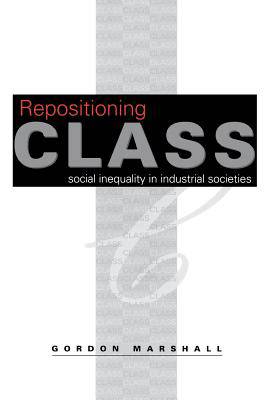
In recent years, the death of social class has regularly been reportedùin popular and scholarly publications alike. However, class analysis is probably now in a healthier state than at any time in its long sociological history, with social class as important to the understanding of late-twentieth century industrial societies as it was to their early-twentieth century counterparts. This book, a major contribution to our understanding of contemporary industrial societies, explains why. Gordon Marshall informs his argument with a number of common substantive themes, broadly pertaining to the relationship between social stratification and social order. Specific issues discussed include the debate about the unit of class composition; the question of meritocracy; the relationship between class and gender; crossnational similarities and differences in mobility regimes; and arguments about proletarianization, distributional struggles, collective identities, and the nature of the so-called underclass in advanced societies.
Specificaties
Betrokkenen
- Auteur(s):
- Uitgeverij:
Inhoud
- Aantal bladzijden:
- 256
- Taal:
- Engels
Eigenschappen
- Productcode (EAN):
- 9780761955580
- Verschijningsdatum:
- 18/08/1997
- Uitvoering:
- Paperback
- Formaat:
- Trade paperback (VS)
- Afmetingen:
- 156 mm x 234 mm
- Gewicht:
- 358 g


Alleen bij Standaard Boekhandel
+ 378 punten op je klantenkaart van Standaard Boekhandel
Cadeau

AANGERADEN


Beoordelingen
We publiceren alleen reviews die voldoen aan de voorwaarden voor reviews. Bekijk onze voorwaarden voor reviews.