


- Afhalen na 1 uur in een winkel met voorraad
- Gratis thuislevering in België vanaf € 30
- Ruim aanbod met 7 miljoen producten
- Afhalen na 1 uur in een winkel met voorraad
- Gratis thuislevering in België vanaf € 30
- Ruim aanbod met 7 miljoen producten





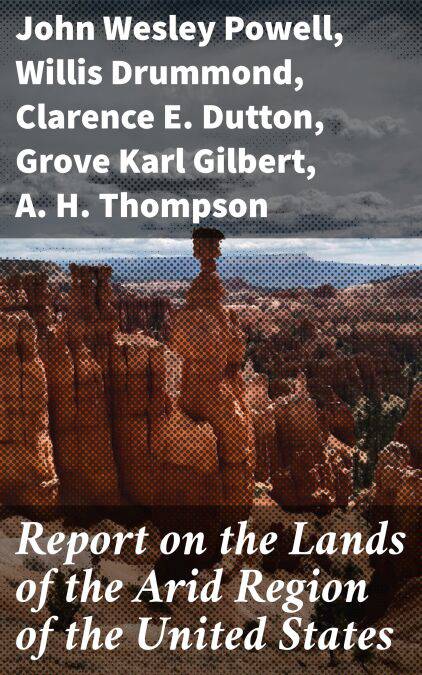
Report on the Lands of the Arid Region of the United States E-BOOK
With a More Detailed Account of the Lands of Utah
John Wesley Powell, Willis Drummond, Clarence E. Dutton, Grove Karl Gilbert, A. H. Thompson
E-book | Engels
€ 1,99
+ 1 punten
Omschrijving
The 'Report on the Lands of the Arid Region of the United States' brings together a crucial collection of scientific and exploratory essays that delve into the transformative landscape of America's dry regions during the late 19th century. This anthology explores themes of water scarcity, environmental transformation, and the socio-economic implications of managing arid lands. The diversity of essays underscores a blend of cartography, geology, and pioneering land reform ideas, seamlessly weaving scientific rigour with visionary land policy discussions. These pieces collectively highlight crucial debates and observations pertaining to the development and sustainability of arid regions, with a standout focus on water resource management and its critical importance. Within this collection, remarkable scholars such as John Wesley Powell and Willis Drummond contribute their roles as prominent figures in advancing land reform and conservation ideologies. These authors, alongside pioneers like Clarence E. Dutton, Grove Karl Gilbert, and A. H. Thompson, offer a multifaceted view rooted in the scientific inquiry and explorative zeal characteristic of the era. Their collective insight represents a shifting American perspective influenced by westward expansion and resource management, aligning with historical movements advocating for more sustainable and scientifically-informed policies. This anthology is a vital resource for anyone interested in understanding the varied and historical perspectives on land and water management. Readers are invited to explore a vast array of insights that not only trace the scientific and cultural advancements of the time but also foster a deeper dialogue on our current environmental challenges. As a compendium of diverse voices, it offers a rich, educational journey through America's ecological and developmental narrative.
Specificaties
Betrokkenen
- Auteur(s):
- Uitgeverij:
Inhoud
- Aantal bladzijden:
- 201
- Taal:
- Engels
Eigenschappen
- Productcode (EAN):
- 4066339545465
- Verschijningsdatum:
- 9/07/2023
- Uitvoering:
- E-book
- Beveiligd met:
- Digital watermarking
- Formaat:
- ePub


Alleen bij Standaard Boekhandel
+ 1 punten op je klantenkaart van Standaard Boekhandel
CADEAU

AANGERADEN


Beoordelingen
We publiceren alleen reviews die voldoen aan de voorwaarden voor reviews. Bekijk onze voorwaarden voor reviews.