


- Afhalen na 1 uur in een winkel met voorraad
- Gratis thuislevering in België vanaf € 30
- Ruim aanbod met 7 miljoen producten
- Afhalen na 1 uur in een winkel met voorraad
- Gratis thuislevering in België vanaf € 30
- Ruim aanbod met 7 miljoen producten





€ 110,00
+ 110 punten
Omschrijving
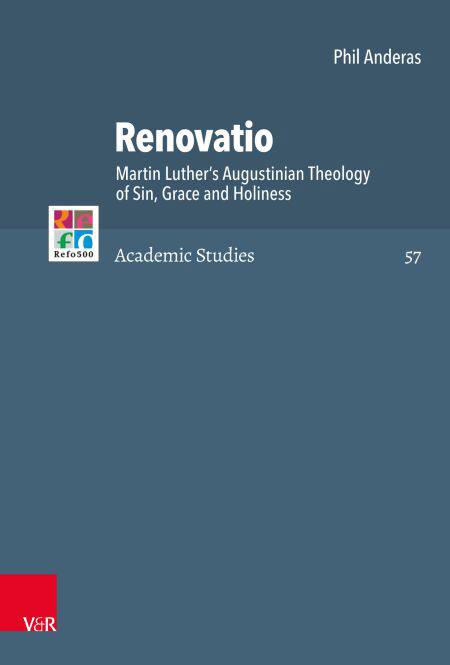
Much mainstream Luther scholarship (and Lutheran theology) holds that Martin Luther downplayed, denied, derided, or just plain ignored "the holiness without which no one shall see the Lord" (Heb. 12:14). Phil Anderas advances a revisionist thesis: from the first inklings of his "Augustinian turn" c. 1514 to his death in 1546, Luther held and taught a robust theology of progressive renewal in holiness, carefully calibrated to the sober reality of residual sin and the astonishing gospel of grace in Jesus Christ. As it is set forth in the works that embody Luther's most considered judgments (c. 1535-46), this gospel-centered and irreducibly trinitarian dogmatics of real renewal in holiness is "Augustinian" and "evangelical" in equal parts. As such, it commands the regard of theologians who stand in the tradition of the Church's doctor gratiae. The argument proceeds in three steps: first, an exposition of the mature Luther's dogmatics of sin, grace, and holiness; second, an investigation of the roots of this dogmatics in the theology of the "420s Augustine," with whom a younger Luther was busily engaged c. 1514-16; third, an account of the continuities and discontinuities that characterize the development of Luther's theology from its embryonic state in the mid-1510s through the breakthroughs of the 1518-21 period to the settled position of the old Doctor.
Specificaties
Betrokkenen
- Auteur(s):
- Uitgeverij:
Inhoud
- Aantal bladzijden:
- 344
- Taal:
- Engels
- Reeks:
Eigenschappen
- Productcode (EAN):
- 9783647593777
- Verschijningsdatum:
- 16/06/2019
- Uitvoering:
- E-book
- Formaat:


Alleen bij Standaard Boekhandel
+ 110 punten op je klantenkaart van Standaard Boekhandel
CADEAU

AANGERADEN


Beoordelingen
We publiceren alleen reviews die voldoen aan de voorwaarden voor reviews. Bekijk onze voorwaarden voor reviews.