


- Afhalen na 1 uur in een winkel met voorraad
- Gratis thuislevering in België vanaf € 30
- Ruim aanbod met 7 miljoen producten
- Afhalen na 1 uur in een winkel met voorraad
- Gratis thuislevering in België vanaf € 30
- Ruim aanbod met 7 miljoen producten





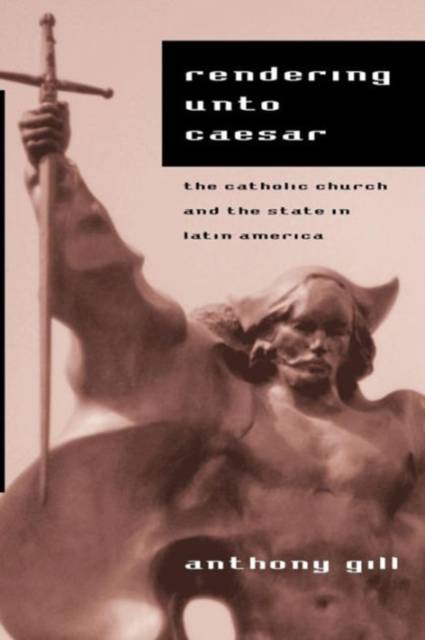
Rendering Unto Caesar
The Catholic Church and the State in Latin America
Anthony Gill
Paperback | Engels
€ 62,95
+ 125 punten
Omschrijving
Nowhere has the relationship between state and church been more volatile in recent decades than in Latin America. Anthony Gill's controversial book not only explains why Catholic leaders in some countries came to oppose dictatorial rule but, equally important, why many did not. Using historical and statistical evidence from twelve countries, Gill for the first time uncovers the causal connection between religious competition and the rise of progressive Catholicism. In places where evangelical Protestantism and "spiritist" sects made inroads among poor Catholics, Church leaders championed the rights of the poor and turned against authoritarian regimes to retain parishioners. Where competition was minimal, bishops maintained good relations with military rulers. Applying economic reasoning to an entirely new setting, Rendering unto Caesar offers a new theory of religious competition that dramatically revises our understanding of church-state relations.
Specificaties
Betrokkenen
- Auteur(s):
- Uitgeverij:
Inhoud
- Aantal bladzijden:
- 284
- Taal:
- Engels
Eigenschappen
- Productcode (EAN):
- 9780226293851
- Verschijningsdatum:
- 3/02/1998
- Uitvoering:
- Paperback
- Formaat:
- Trade paperback (VS)
- Afmetingen:
- 154 mm x 229 mm
- Gewicht:
- 449 g



Alleen bij Standaard Boekhandel
+ 125 punten op je klantenkaart van Standaard Boekhandel
Cadeau

AANGERADEN


Beoordelingen
We publiceren alleen reviews die voldoen aan de voorwaarden voor reviews. Bekijk onze voorwaarden voor reviews.