


- Afhalen na 1 uur in een winkel met voorraad
- Gratis thuislevering in België vanaf € 30
- Ruim aanbod met 7 miljoen producten
- Afhalen na 1 uur in een winkel met voorraad
- Gratis thuislevering in België vanaf € 30
- Ruim aanbod met 7 miljoen producten





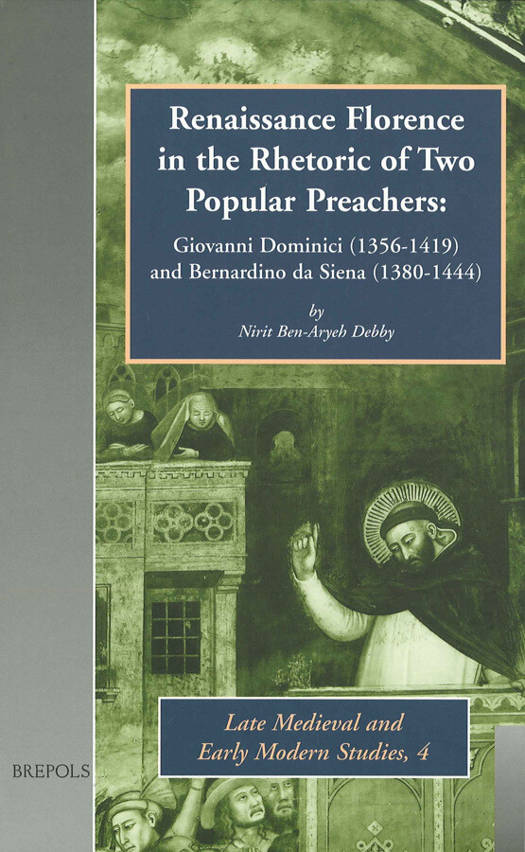
Renaissance Florence in the Rhetoric of Two Popular Preachers
Giovanni Dominici (1356-1419) and Bernardino Da Siena (1380-1444)
Nirit Ben-Aryeh Debby
€ 47,70
+ 95 punten
Eenvoudig bestellen
Veilig betalen


Gratis thuislevering vanaf € 30 (via bpost)
Gratis levering in je Standaard Boekhandel
Omschrijving
The preaching of the Dominican friar Girolamo Savonarola and the period of his dominance (1494-1498) are a well-known chapter in the history of Renaissance Florence. However, comparatively less research has been done on Savonarola's predecessors, the mendicant preachers of Florence in the first half of the fifteenth century. The Dominican Giovanni Dominici (1356-1419) and the Franciscan Bernardino da Siena (1380-1444) were the most important of these preachers. Dominici's and Bernardino's sermons, as they appear in Tuscan reports (reportationes) of their preaching, are a valuable historical source. Written down by anonymous listeners, these are the major reports of sermons preached in fifteenth-century Florence before Savonarola. The reportationes are unique in that they transmit in full the actual preaching event and are not merely a doctrinal summary composed by the preacher. Many of these sermons are still in manuscript form, especially those of Dominici, which have never been studied in detail and remain unpublished to this day. Dominici and Bernardino were active in Florence at a time when broad legal, social and cultural changes were taking place. The central purpose of this study is to examine the response of these preachers to the changes, the alternatives they offered and their attempts to direct the life of the laity. The four principal chapters are devoted to the preachers' opinions on secular and ecclesiastical politics, education and humanism, morality and the family and the economy and usury (the role of the Jews), the discussion built around a comparison between the two preachers. Although they differed in their interests and in their style - the unbending Dominici concentrating on politics and culture while the more flexible Bernardino focused on morality and the economy - they shared ideologies.
Specificaties
Betrokkenen
- Auteur(s):
- Uitgeverij:
Inhoud
- Aantal bladzijden:
- 358
- Taal:
- Engels, Italiaans
- Reeks:
- Reeksnummer:
- nr. 4
Eigenschappen
- Productcode (EAN):
- 9782503511634
- Verschijningsdatum:
- 1/11/2001
- Uitvoering:
- Hardcover
- Formaat:
- Genaaid
- Afmetingen:
- 156 mm x 258 mm
- Gewicht:
- 757 g


Alleen bij Standaard Boekhandel
+ 95 punten op je klantenkaart van Standaard Boekhandel
CADEAU

AANGERADEN


Beoordelingen
We publiceren alleen reviews die voldoen aan de voorwaarden voor reviews. Bekijk onze voorwaarden voor reviews.