


- Afhalen na 1 uur in een winkel met voorraad
- Gratis thuislevering in België vanaf € 30
- Ruim aanbod met 7 miljoen producten
- Afhalen na 1 uur in een winkel met voorraad
- Gratis thuislevering in België vanaf € 30
- Ruim aanbod met 7 miljoen producten





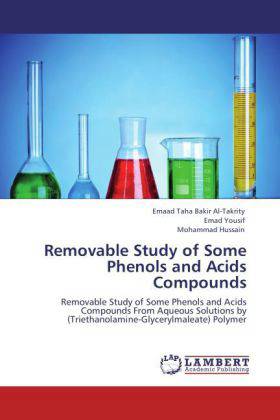
Removable Study of Some Phenols and Acids Compounds
Removable Study of Some Phenols and Acids Compounds From Aqueous Solutions by (Triethanolamine-Glycerylmaleate) Polymer
Emaad Taha Bakir Al-Takrity, Emad Yousif, Mohammad Hussain
Paperback | Engels
€ 61,95
+ 123 punten
Omschrijving
Triethanolamine-glycerylmaleate polymer was prepared, and identified by FTIR spectroscopy then swelling tests were performed for this polymer in different solvents. The adsorption processes of the some phenols and acids compounds: ph, na, nal, B, AB and DAB in aqueous solutions on the surface of this polymer were investigated by the use of UV-visible spectrophotometer and also studied at different: temperatures, ionic strength, and pH. The results revealed that the adsorption for compound at temperature of 25 °C took: S-mode for all compounds according to Giles classification. 1- At temperature of 25 C the adsorbate amount arrange to the following order: ph nal na B AB DAB 2- The adsorption for ph, na, nal, and B take the following order for ionic strength 0.1M NaCl 0.0M NaCl 0.2M NaCl But for AB, and DAB take 0.0M NaCl 0.1M NaCl 0.2M NaCl 3- Generally it was noticed that adsorption quantities is proportionally correlated with the pH studies. 4- The H values for all adsorbate compounds were negative, while S values were negative for all compounds except for ph and B. 5- In comparison with zeolite (5A) the prepared polymer posse s
Specificaties
Betrokkenen
- Auteur(s):
- Uitgeverij:
Inhoud
- Aantal bladzijden:
- 92
- Taal:
- Engels
Eigenschappen
- Productcode (EAN):
- 9783845474441
- Verschijningsdatum:
- 16/01/2012
- Uitvoering:
- Paperback
- Afmetingen:
- 152 mm x 229 mm
- Gewicht:
- 145 g


Alleen bij Standaard Boekhandel
+ 123 punten op je klantenkaart van Standaard Boekhandel
Cadeau

AANGERADEN


Beoordelingen
We publiceren alleen reviews die voldoen aan de voorwaarden voor reviews. Bekijk onze voorwaarden voor reviews.