


- Afhalen na 1 uur in een winkel met voorraad
- Gratis thuislevering in België vanaf € 30
- Ruim aanbod met 7 miljoen producten
- Afhalen na 1 uur in een winkel met voorraad
- Gratis thuislevering in België vanaf € 30
- Ruim aanbod met 7 miljoen producten





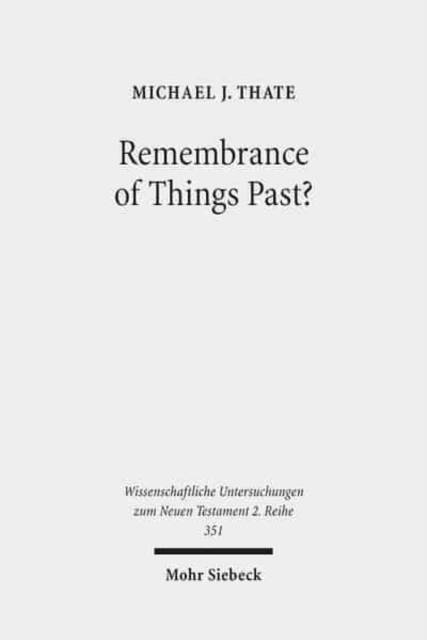
Remembrance of Things Past?
Albert Schweitzer, the Anxiety of Influence, and the Untidy Jesus of Markan Memory
Michael J Thate
€ 119,95
+ 239 punten
Omschrijving
In this book, Michael J. Thate offers an experiment in reception criticism in its consideration of the formation and reception of the historical Jesus discourse. He also attempts to historicize Leben-Jesu-Forschung within debates and narratives of secularization. These two foci guide the book through its two parts. First Thate explicates Schweitzer's dominant archival function in Leben-Jesu-Forschung, while aiming to make fragile the "grand architect's" receptive hegemony. Then he combines critical memory theory and other theoretical readings of the material in an attempt to refocus the study of the historical Jesus as early Christian memory politics in the service of identity explication. He attempts to problematize Schweitzer's legacy of a tidy systematic approach in which much of historical Jesus scholarship continues to operate.
Specificaties
Betrokkenen
- Auteur(s):
- Uitgeverij:
Inhoud
- Aantal bladzijden:
- 374
- Taal:
- Engels
- Reeks:
- Reeksnummer:
- nr. 351
Eigenschappen
- Productcode (EAN):
- 9783161526336
- Verschijningsdatum:
- 1/07/2013
- Uitvoering:
- Paperback
- Formaat:
- Trade paperback (VS)
- Afmetingen:
- 160 mm x 220 mm
- Gewicht:
- 598 g


Alleen bij Standaard Boekhandel
+ 239 punten op je klantenkaart van Standaard Boekhandel
Cadeau

AANGERADEN


Beoordelingen
We publiceren alleen reviews die voldoen aan de voorwaarden voor reviews. Bekijk onze voorwaarden voor reviews.