Standaard Boekhandel gebruikt cookies en gelijkaardige technologieën om de website goed te laten werken en je een betere surfervaring te bezorgen.
Hieronder kan je kiezen welke cookies je wilt inschakelen:
Technische en functionele cookies
Deze cookies zijn essentieel om de website goed te laten functioneren, en laten je toe om bijvoorbeeld in te loggen. Je kan deze cookies niet uitschakelen.
Analytische cookies
Deze cookies verzamelen anonieme informatie over het gebruik van onze website. Op die manier kunnen we de website beter afstemmen op de behoeften van de gebruikers.
Marketingcookies
Deze cookies delen je gedrag op onze website met externe partijen, zodat je op externe platformen relevantere advertenties van Standaard Boekhandel te zien krijgt.
Bedankt voor het vertrouwen het afgelopen jaar! Om jou te bedanken bieden we GRATIS verzending (in België) aan op alles gedurende de hele maand januari.
Afhalen na 1 uur in een winkel met voorraad
In januari gratis thuislevering in België
Ruim aanbod met 7 miljoen producten
Bedankt voor het vertrouwen het afgelopen jaar! Om jou te bedanken bieden we GRATIS verzending (in België) aan op alles gedurende de hele maand januari.
Je kan maximaal 250 producten tegelijk aan je winkelmandje toevoegen. Verwijdere enkele producten uit je winkelmandje, of splits je bestelling op in meerdere bestellingen.
In januari gratis thuislevering in België (via bpost)
Gratis levering in je Standaard Boekhandel
Omschrijving
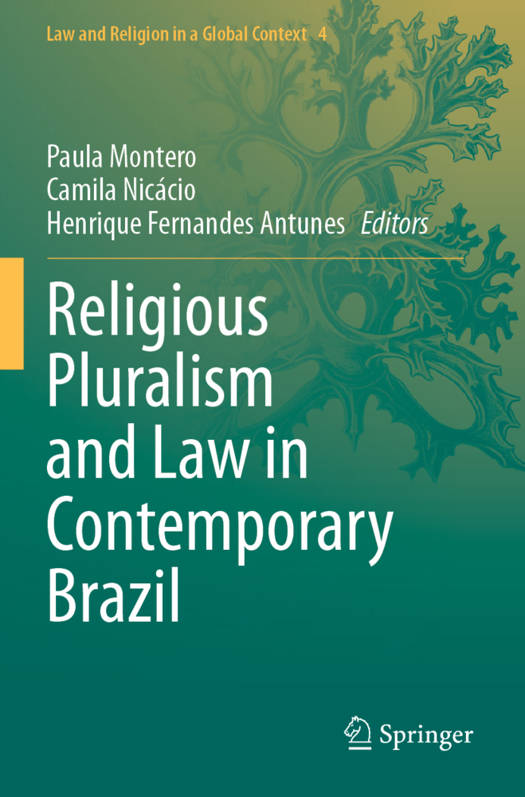
This book represents a unique contribution to understanding the interactions between law and religion in contemporary Brazil. It analyzes how the regulation of religions according to the classical notion of secularism has become a source of tensions since the 1990s. Against this background, the respective chapters demonstrate, on the basis of various case studies, how the constitutional principle of pluralism, introduced by the 1988 federal constitution after a military dictatorship, has been addressed by new political actors, such as religious leaders, parliamentarians, influencers, state representatives, and activists. In particular, the chapters demonstrate how the mobilization of legal language, notably the language of human rights, has become fundamental to developing and consolidating new political agendas concerning secularism, tolerance, freedom of expression, gender and sexuality, family, and cultural heritage. In the authors' approach, human rights assume a central role in social disputes as a language in which actors constitute themselves as rights subjects, form activist networks, and pursue their goals by expressing themselves in public. Given its focus and scope, the book will be of interest to all scholars seeking to understand the relationships between diversity and the regulation of religious practices in plural societies, where the classical notion of secularism continues to show its limitations.