


- Afhalen na 1 uur in een winkel met voorraad
- Gratis thuislevering in België vanaf € 30
- Ruim aanbod met 7 miljoen producten
- Afhalen na 1 uur in een winkel met voorraad
- Gratis thuislevering in België vanaf € 30
- Ruim aanbod met 7 miljoen producten





€ 169,60
+ 339 punten
Omschrijving
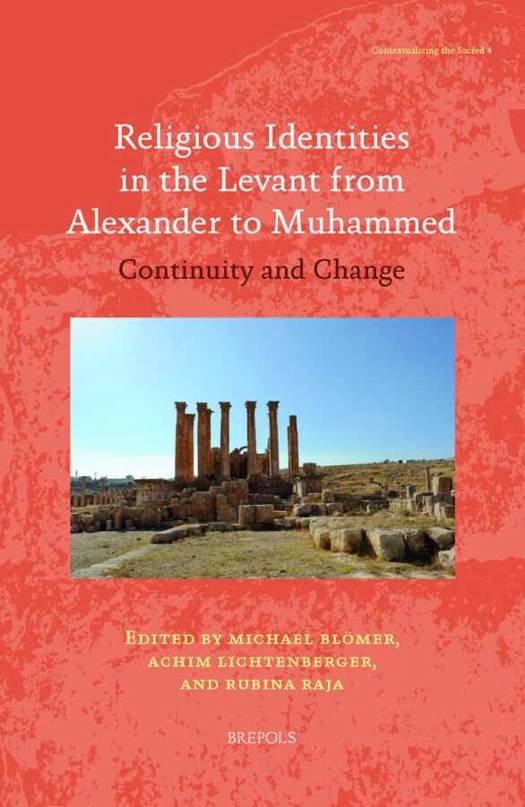
This volume addresses questions of continuity and change in the religious life of the Levant between Alexander's conquest of the Middle East until the end of the Umayyad period, a topic which has received growing attention over the last decade within the fields of ancient history, archaeology, philology, and religious studies. The volume pulls together the efforts of scholars from all of these fields, and its central concerns include the representations and expressions of religious identity in sacred architecture, iconography, and texts. These representations and expressions are explored through literature, inscriptions, and iconography, and though the architectural as well as the functional development of sanctuaries, churches, and mosques. The volume includes papers on themes such as definition, creation, dissolution, and interconnection between sacred sites, as well as access and audience. These developments are examined through the lenses of aspects of continuity and change in material and literary culture. With a point of departure in the development of urban, sub-urban, and extra-urban sanctuaries, churches, and early mosques, as well as their associated cults and religions, the contributions in this volume explore the shaping and development of the religious identities of individuals, groups, and societies, and assess how these categories of religious identity were interrelated and shaped by a variety of circumstances. The volume aims at underlining the importance of interdisciplinary studies to the comprehensive understanding of this complex field and at opening up discussions of methodological and theoretical approaches which can be used across these disciplines.
Specificaties
Betrokkenen
- Auteur(s):
- Uitgeverij:
Inhoud
- Aantal bladzijden:
- 462
- Taal:
- Frans
- Reeks:
- Reeksnummer:
- nr. 4
Eigenschappen
- Productcode (EAN):
- 9782503544458
- Verschijningsdatum:
- 3/03/2015
- Uitvoering:
- Paperback
- Formaat:
- Trade paperback (VS)
- Afmetingen:
- 211 mm x 279 mm
- Gewicht:
- 1619 g


Alleen bij Standaard Boekhandel
+ 339 punten op je klantenkaart van Standaard Boekhandel
Cadeau

AANGERADEN


Beoordelingen
We publiceren alleen reviews die voldoen aan de voorwaarden voor reviews. Bekijk onze voorwaarden voor reviews.