


- Afhalen na 1 uur in een winkel met voorraad
- Gratis thuislevering in België vanaf € 30
- Ruim aanbod met 7 miljoen producten
- Afhalen na 1 uur in een winkel met voorraad
- Gratis thuislevering in België vanaf € 30
- Ruim aanbod met 7 miljoen producten





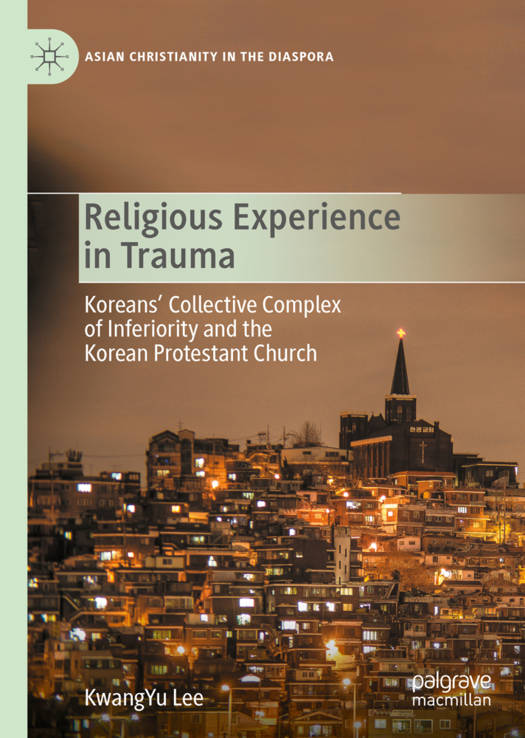
Religious Experience in Trauma
Koreans' Collective Complex of Inferiority and the Korean Protestant Church
Kwangyu Lee
€ 108,45
+ 216 punten
Uitvoering
Omschrijving
This book offers a psychohistorical analysis of the rapid growth of the Korean Protestant Church. KwangYu Lee looks at some of the traumatic historical events of Korea in the 20th century, including the fall of the Joseon Dynasty (1392-1910), the Japanese Occupation (1910-1945), the Korean War (1950-1953), and the Korean Military Dictatorship (1961-1987), and explores the psychological impacts of these events on the collective unconsciousness of Koreans. He argues that Koreans' collective (or cultural) complex of inferiority, which was caused and gradually exacerbated by these traumatic events, along with their psychological relationships with their two colonizers-the Japanese and Americans-prompted them to convert to Korean Protestantism en masse as a means to avoid their psychological pains and to fulfil their futile desire to become like Americans, their overtly idealized psychological-object.
Specificaties
Betrokkenen
- Auteur(s):
- Uitgeverij:
Inhoud
- Aantal bladzijden:
- 199
- Taal:
- Engels
- Reeks:
Eigenschappen
- Productcode (EAN):
- 9783030535827
- Verschijningsdatum:
- 4/09/2020
- Uitvoering:
- Hardcover
- Formaat:
- Genaaid
- Afmetingen:
- 148 mm x 210 mm
- Gewicht:
- 430 g


Alleen bij Standaard Boekhandel
+ 216 punten op je klantenkaart van Standaard Boekhandel
Cadeau

AANGERADEN


Beoordelingen
We publiceren alleen reviews die voldoen aan de voorwaarden voor reviews. Bekijk onze voorwaarden voor reviews.