


- Afhalen na 1 uur in een winkel met voorraad
- Gratis thuislevering in België vanaf € 30
- Ruim aanbod met 7 miljoen producten
- Afhalen na 1 uur in een winkel met voorraad
- Gratis thuislevering in België vanaf € 30
- Ruim aanbod met 7 miljoen producten





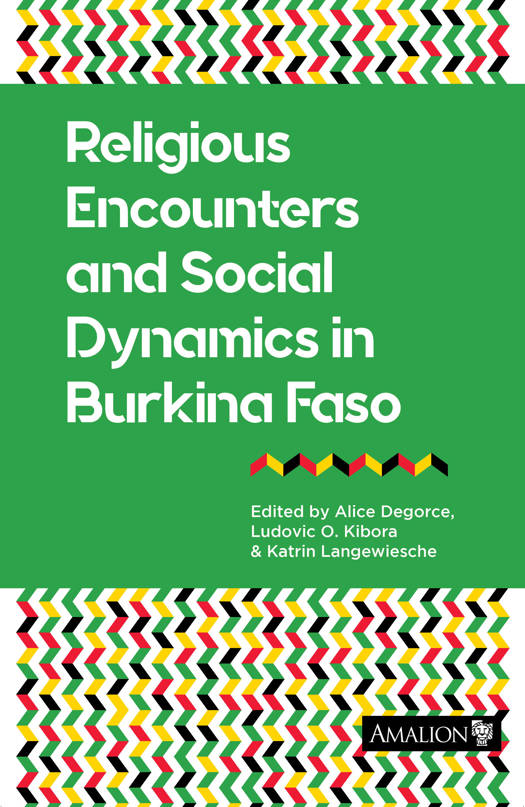
Religious Encounters and Social Dynamics in Burkina Faso
Alice Degorce, Katrin Langewiesche, Ludovic Ouhonyioué Kibora
Boek | Engels
€ 35,00
+ 70 punten
Omschrijving
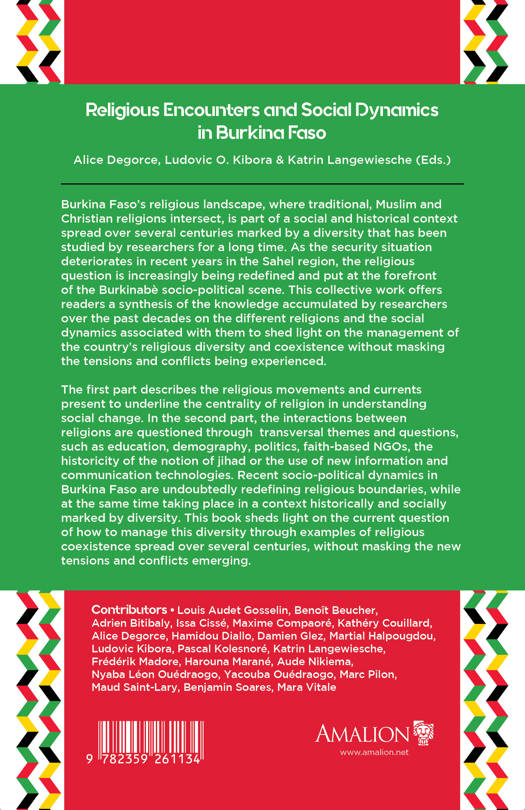
Burkina Faso’s religious landscape, where traditional, Islamic and Christian religions intersect, is part of a social and historical context spread over several centuries marked by a diversity that has been studied by researchers for a long time. As the security situation deteriorates in recent years in the Sahel region, the religious question is increasingly being redefined and placed at the forefront of the Burkinabe socio-political scene. This collective work offers readers a synthesis of the knowledge accumulated by researchers over the past decades on the different religions and the social dynamics associated with them to shed light on the management of the country’s religious diversity and coexistence without masking the new tensions and conflicts being experienced.
The first part of the book thoroughly explores the religious movements and currents present in the country to underline the centrality of religion in understanding social change in its polity. In the second part, the interactions between religions are analyzed across current transversal themes and questions, such as education, demography, politics, the role of faith-based NGOs, the historicity of the notion of jihad or the use of new information and communication technologies to show the connections within the construction of knowledge and political contexts. The contributions acutely show that recent socio-political dynamics in Burkina Faso are undoubtedly redefining religious boundaries and exposing the limitations of a historically and socially rooted contexts of diversity, yet the question remains on how to draw on this diversity and religious coexistence to confront new emerging tensions and conflicts.
The first part of the book thoroughly explores the religious movements and currents present in the country to underline the centrality of religion in understanding social change in its polity. In the second part, the interactions between religions are analyzed across current transversal themes and questions, such as education, demography, politics, the role of faith-based NGOs, the historicity of the notion of jihad or the use of new information and communication technologies to show the connections within the construction of knowledge and political contexts. The contributions acutely show that recent socio-political dynamics in Burkina Faso are undoubtedly redefining religious boundaries and exposing the limitations of a historically and socially rooted contexts of diversity, yet the question remains on how to draw on this diversity and religious coexistence to confront new emerging tensions and conflicts.
Specificaties
Betrokkenen
- Auteur(s):
- Uitgeverij:
Inhoud
- Aantal bladzijden:
- 340
- Taal:
- Engels
Eigenschappen
- Productcode (EAN):
- 9782359261134
- Verschijningsdatum:
- 23/06/2026
- Uitvoering:
- Boek
- Afmetingen:
- 156 mm x 234 mm
- Gewicht:
- 500 kg


Alleen bij Standaard Boekhandel
+ 70 punten op je klantenkaart van Standaard Boekhandel
Cadeau

AANGERADEN


Beoordelingen
We publiceren alleen reviews die voldoen aan de voorwaarden voor reviews. Bekijk onze voorwaarden voor reviews.