


- Afhalen na 1 uur in een winkel met voorraad
- Gratis thuislevering in België vanaf € 30
- Ruim aanbod met 7 miljoen producten
- Afhalen na 1 uur in een winkel met voorraad
- Gratis thuislevering in België vanaf € 30
- Ruim aanbod met 7 miljoen producten





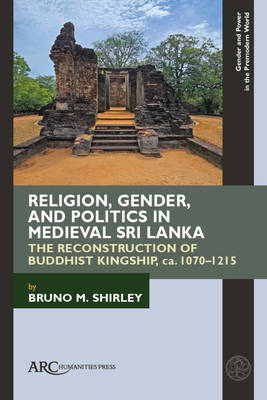
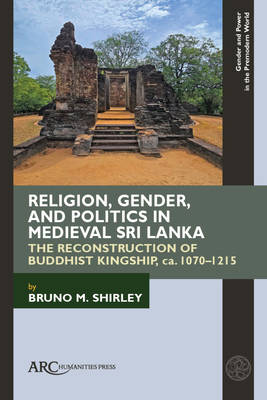
Religion, Gender, and Politics in Medieval Sri Lanka
The Reconstruction of Buddhist Kingship, Ca. 1070-1215
Bruno M Shirley
€ 296,95
+ 593 punten
Omschrijving
The early second millennium was a pivotal moment in the history of Theravāda Buddhism. Religious reforms carried out at Poḷonnaruva, then-capital of Sri Lanka, shaped the latter course of Buddhism across South and Southeast Asia. However, our understanding of these reforms has been over-determined by retrospective accounts written by male monastics, who focused on the heroic deeds of male monarchs.
This book offers a radical revision of this narrative. Drawing on textual, inscriptional, numismatic, and material evidence from within the period itself, it reveals how the intellectual and social histories of Buddhism, politics, and gender were inextricably intertwined in Poḷonnaruva. In particular, it argues that debates over what it meant to be a "good Buddhist king" were intrinsically debates about Buddhist masculinity and about the proper relationship of gender to power.
Specificaties
Betrokkenen
- Auteur(s):
- Uitgeverij:
Inhoud
- Aantal bladzijden:
- 280
- Taal:
- Engels
- Reeks:
Eigenschappen
- Productcode (EAN):
- 9781802703092
- Verschijningsdatum:
- 28/02/2026
- Uitvoering:
- Hardcover
- Formaat:
- Genaaid
- Afmetingen:
- 152 mm x 229 mm


Alleen bij Standaard Boekhandel
+ 593 punten op je klantenkaart van Standaard Boekhandel
Cadeau

AANGERADEN


Beoordelingen
We publiceren alleen reviews die voldoen aan de voorwaarden voor reviews. Bekijk onze voorwaarden voor reviews.