


- Afhalen na 1 uur in een winkel met voorraad
- Gratis thuislevering in België vanaf € 30
- Ruim aanbod met 7 miljoen producten
- Afhalen na 1 uur in een winkel met voorraad
- Gratis thuislevering in België vanaf € 30
- Ruim aanbod met 7 miljoen producten





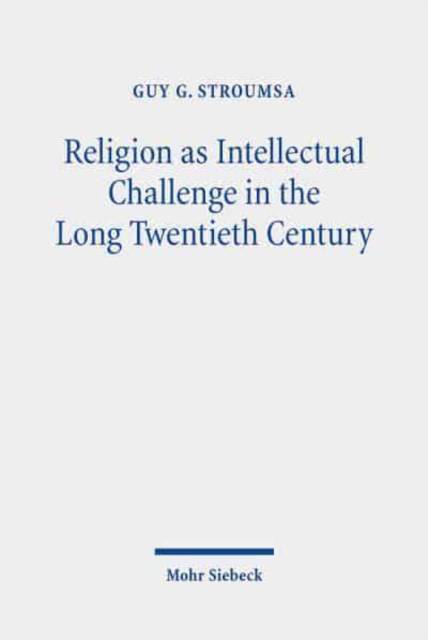
Religion as Intellectual Challenge in the Long Twentieth Century
Selected Essays
Guy G Stroumsa
Paperback | Engels
€ 104,45
+ 208 punten
Omschrijving
At the dawn of the twentieth century, many leading European intellectuals, perceiving that religion was in rapid decline in their secularizing societies, thought that it was doomed to soon become marginal, and eventually to disappear, throughout the world. A century later, such naive beliefs have collapsed. We are struck by the complexity of religious transformations in our globalized world. Today, religion often appears to have been hijacked by murderous "thugs for God's sake," who come in various shapes and colours, but always with the same intentions they are often also willing to act on. In the essays in this volume, Guy G. Stroumsa reflects on some leading intellectuals, such as Sigmund Freud, Martin Buber, Emmanuel Levinas and Carlo Ginzburg, and how they approached an understanding of religious phenomena from their own disciplinary viewpoints. The volume closes with comments on crucial problems and methods in the contemporary study of religion.
Specificaties
Betrokkenen
- Auteur(s):
- Uitgeverij:
Inhoud
- Aantal bladzijden:
- 252
- Taal:
- Engels
Eigenschappen
- Productcode (EAN):
- 9783161607202
- Verschijningsdatum:
- 1/08/2021
- Uitvoering:
- Paperback
- Formaat:
- Trade paperback (VS)
- Afmetingen:
- 231 mm x 154 mm
- Gewicht:
- 376 g


Alleen bij Standaard Boekhandel
+ 208 punten op je klantenkaart van Standaard Boekhandel
Cadeau

AANGERADEN


Beoordelingen
We publiceren alleen reviews die voldoen aan de voorwaarden voor reviews. Bekijk onze voorwaarden voor reviews.