


- Afhalen na 1 uur in een winkel met voorraad
- Gratis thuislevering in België vanaf € 30
- Ruim aanbod met 7 miljoen producten
- Afhalen na 1 uur in een winkel met voorraad
- Gratis thuislevering in België vanaf € 30
- Ruim aanbod met 7 miljoen producten





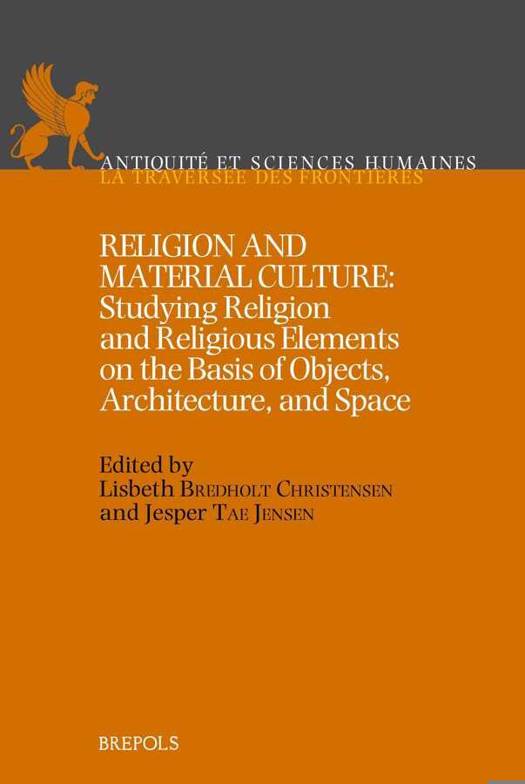
Religion and Material Culture
Studying Religion and Religious Elements on the Basis of Objects, Architecture, and Space: Proceedings of an International Conference Held at the Centre for Bible and Cultural Memory (Bicum), University of Copenhagen and the National Museum of Denmar
Lisbeth Bredholt
€ 121,90
+ 243 punten
Omschrijving
Whereas until recently the history of religions began with the Sumerians and the first texts, the material turn in the humanities has opened up the possibility for tracing the history of religions back to before the invention of writing. The book gathers specialists from a variety of fields to explore the possibilities of the material perspective in the study of religion. Within a diachronic perspective, archaeologists, scholars of religion, theologians, and ancient historians focus on how the gradual invention of various forms of material culture - graves, images, objects - has made it possible for certain religious expressions to be constructed, arise, and enfold. Also, the volume investigates what types of material culture characterizes religion and what these mean. The volume represents a joint, cross-disciplinary effort to investigate religion and its various aspects with a point of departure in material culture. This means rethinking basic assumptions about religion and how to study it. Integrating material culture approaches with textual approaches, the contributions discuss the foundations for a history of religion which is not limited to a textual perspective but which is both broader and wider, both reaching back in prehistory and out to other spheres.
Specificaties
Betrokkenen
- Auteur(s):
- Uitgeverij:
Inhoud
- Aantal bladzijden:
- 378
- Taal:
- Engels
- Reeks:
- Reeksnummer:
- nr. 3
Eigenschappen
- Productcode (EAN):
- 9782503569000
- Verschijningsdatum:
- 4/06/2018
- Uitvoering:
- Paperback
- Formaat:
- Trade paperback (VS)
- Afmetingen:
- 155 mm x 234 mm
- Gewicht:
- 657 g


Alleen bij Standaard Boekhandel
+ 243 punten op je klantenkaart van Standaard Boekhandel
CADEAU

AANGERADEN


Beoordelingen
We publiceren alleen reviews die voldoen aan de voorwaarden voor reviews. Bekijk onze voorwaarden voor reviews.