



Je cadeautjes zeker op tijd in huis hebben voor de feestdagen? Kom langs in onze winkels en vind het perfecte geschenk!
- Afhalen na 1 uur in een winkel met voorraad
- Gratis thuislevering in België vanaf € 30
- Ruim aanbod met 7 miljoen producten
Je cadeautjes zeker op tijd in huis hebben voor de feestdagen? Kom langs in onze winkels en vind het perfecte geschenk!
- Afhalen na 1 uur in een winkel met voorraad
- Gratis thuislevering in België vanaf € 30
- Ruim aanbod met 7 miljoen producten





€ 13,95
+ 27 punten
Uitvoering
Omschrijving
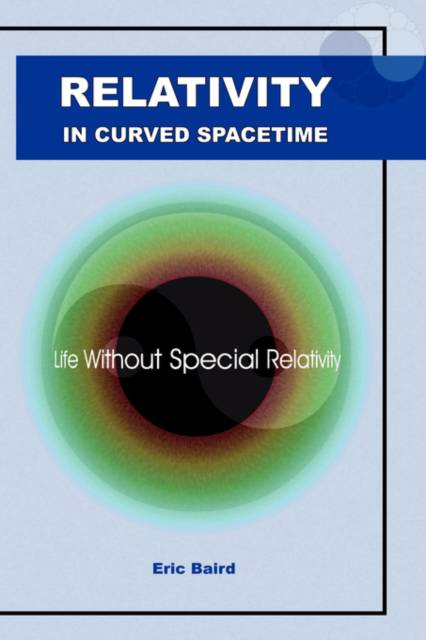
Relativity theory has become one of the icons of Twentieth Century science. It's reckoned to be a difficult subject, taught as a layered series of increasingly difficult mathematics and increasingly abstract concepts. We're told that relativity theory is supposed to be this complicated and counter-intuitive. But how much of this historical complexity is really necessary? Can we bypass the interpretations and paradoxes and pseudoparadoxes of Einstein's special theory and jump directly to a deeper and more intuitive description of reality? What if curvature is a fundamental part of physics, and a final theory of relativity shouldn't reduce to Einstein's "flat" 1905 theory //on principle//? "Relativity..." takes us on a whistlestop tour of Twentieth Century physics - from black holes, quantum mechanics, wormholes and the Big Bang to the workings of the human mind, and asks: what would physics look like without special relativity? 394 printed pages, 234156 mm, 200 figures and illustrations, includes bibliography and index www.relativitybook.com
Specificaties
Betrokkenen
- Auteur(s):
- Uitgeverij:
Inhoud
- Aantal bladzijden:
- 396
- Taal:
- Engels
Eigenschappen
- Productcode (EAN):
- 9780955706806
- Verschijningsdatum:
- 19/09/2007
- Uitvoering:
- Paperback
- Formaat:
- Trade paperback (VS)
- Afmetingen:
- 156 mm x 234 mm
- Gewicht:
- 553 g


Alleen bij Standaard Boekhandel
+ 27 punten op je klantenkaart van Standaard Boekhandel
CADEAU


Beoordelingen
We publiceren alleen reviews die voldoen aan de voorwaarden voor reviews. Bekijk onze voorwaarden voor reviews.