


- Afhalen na 1 uur in een winkel met voorraad
- Gratis thuislevering in België vanaf € 30
- Ruim aanbod met 7 miljoen producten
- Afhalen na 1 uur in een winkel met voorraad
- Gratis thuislevering in België vanaf € 30
- Ruim aanbod met 7 miljoen producten





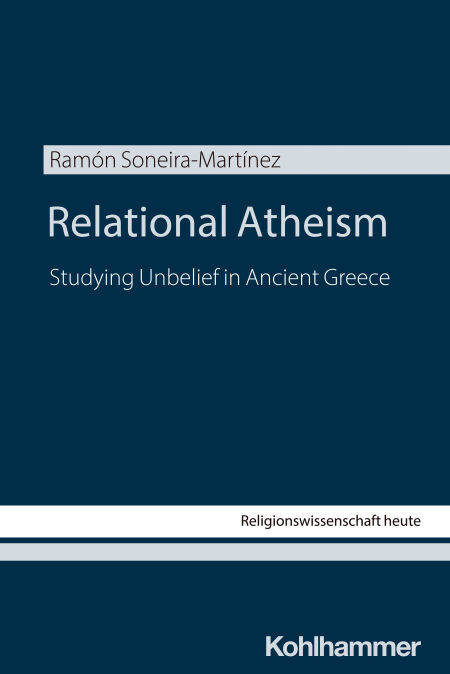
Relational Atheism E-BOOK
Studying Unbelief in Ancient Greece
Ramón Soneira-Martínez
E-book | Engels
€ 58,99
+ 58 punten
Uitvoering
Eenvoudig bestellen
Veilig betalen


Onmiddellijk geleverd via e-mail
Omschrijving
This book reorients the study of 'unbelief' in Ancient Greece by dismantling two persistent scholarly misconceptions: the portrayal of Greek atheism as a form of proto-modern secularity and the dismissal of the subject as merely a lexical dispute over definitions. By integrating a diverse range of philosophical, medical and epigraphical sources, the author contextualises irreligious stances within the discursive and social ecology that shaped Greek religiosity. Rather than representing an external negation of the divine, unbelief emerges as a historically specific modification of self-world relations. Leveraging relational sociology and contemporary Religious Studies, this analysis demonstrates how doubt, critique and denial took root within the fabric of lived ancient religion - from theatre and intellectual circles to civic conflict and the politics of impiety. The result is a transformative account of Greek unbelief and a transferable analytical model for future comparative and historical research.
Specificaties
Betrokkenen
- Auteur(s):
- Uitgeverij:
Inhoud
- Aantal bladzijden:
- 234
- Taal:
- Engels
Eigenschappen
- Productcode (EAN):
- 9783170471887
- Verschijningsdatum:
- 3/03/2026
- Uitvoering:
- E-book
- Beveiligd met:
- Digital watermarking
- Formaat:
- ePub


Alleen bij Standaard Boekhandel
+ 58 punten op je klantenkaart van Standaard Boekhandel
CADEAU

AANGERADEN


Beoordelingen
We publiceren alleen reviews die voldoen aan de voorwaarden voor reviews. Bekijk onze voorwaarden voor reviews.