


- Afhalen na 1 uur in een winkel met voorraad
- Gratis thuislevering in België vanaf € 30
- Ruim aanbod met 7 miljoen producten
- Afhalen na 1 uur in een winkel met voorraad
- Gratis thuislevering in België vanaf € 30
- Ruim aanbod met 7 miljoen producten





€ 36,95
+ 73 punten
Uitvoering
Omschrijving
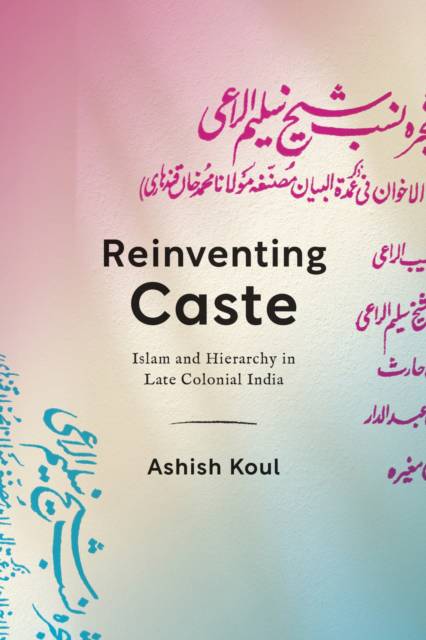
This book reveals that caste, usually assumed to be a feature of Hindu society, was in fact a trans-religious phenomenon in colonial India, as it is today. Even in an Islamic religious milieu that was supposedly more egalitarian than hierarchical Hinduism, colonial Indian subjects thought and acted in terms of caste. Through a focus on one agrarian Muslim caste known as Arains, Ashish Koul shows how some Indian Muslims transmuted caste and emplaced it within their understanding of Islam. During this time, Arain Muslims were derogatively called mali-- gardener--instead of what they wished to be seen as--respectable landholders. Seeking to refute such negative portrayals, a group of elite Arains came together to develop a new Islamic vocabulary for caste.
Using primary sources in English and Urdu, Koul analyzes the intricacies of caste, religion, and politics among Muslims in colonial India. By asserting that being Arain was a way of being a true Muslim, elite Arains were able to intervene in significant debates about Muslim identity, colonial law, and political representation. Reinventing Caste shows that in order to understand why caste persists among South Asians, we must examine how caste consciousness has been entrenched within multiple religious traditions.
Specificaties
Betrokkenen
- Auteur(s):
- Uitgeverij:
Inhoud
- Aantal bladzijden:
- 290
- Taal:
- Engels
- Reeks:
Eigenschappen
- Productcode (EAN):
- 9781503646711
- Verschijningsdatum:
- 2/06/2026
- Uitvoering:
- Paperback
- Formaat:
- Trade paperback (VS)
- Afmetingen:
- 152 mm x 226 mm
- Gewicht:
- 385 g


Alleen bij Standaard Boekhandel
+ 73 punten op je klantenkaart van Standaard Boekhandel
Cadeau

AANGERADEN


Beoordelingen
We publiceren alleen reviews die voldoen aan de voorwaarden voor reviews. Bekijk onze voorwaarden voor reviews.