


- Afhalen na 1 uur in een winkel met voorraad
- Gratis thuislevering in België vanaf € 30
- Ruim aanbod met 7 miljoen producten
- Afhalen na 1 uur in een winkel met voorraad
- Gratis thuislevering in België vanaf € 30
- Ruim aanbod met 7 miljoen producten





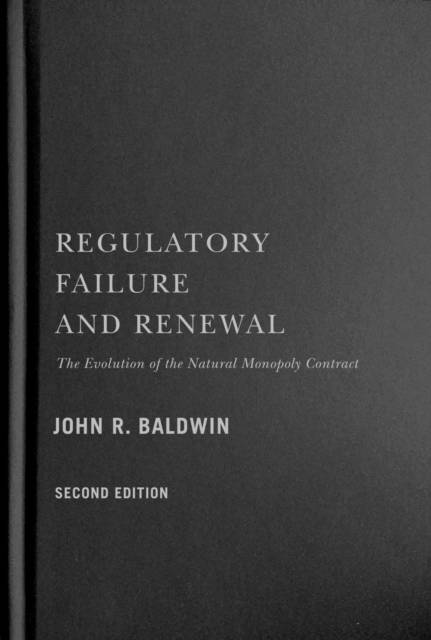
Regulatory Failure and Renewal
The Evolution of the Natural Monopoly Contract, Second Edition
John Baldwin
€ 150,95
+ 301 punten
Omschrijving
Regulatory Failure and Renewal develops a framework to understand the choice of regulatory instrument used in Canada for natural monopolies such as telephone companies, water utilities, streetcars, hydroelectricity, and railways from the 1880s to the 1930s.
Using the transaction-cost literature pioneered by Oliver Williamson, John Baldwin examines the nature of contractual failure in Canada in natural monopoly cases, asking why initial forms of contracts between the state and private enterprise failed and why this failure so often resulted in the use of public enterprise. Baldwin outlines early attempts to deal with natural monopolies - from the use of a franchise contract to regulatory tribunals and finally to public enterprise - and compares Canadian experiences to US approaches, which turned more frequently to regulatory tribunals. This difference is due to Canada's more limited constraints on the state's ability to exercise coercive power, which sometimes leads to contractual failure that results in replacing franchise and regulatory frameworks with public enterprise. Regulatory Failure and Renewal demonstrates that public enterprise arose not so much as part of a purposive choice but because of reoccurring failures in the contractual process between the Canadian state and private enterprise.Specificaties
Betrokkenen
- Auteur(s):
- Uitgeverij:
Inhoud
- Aantal bladzijden:
- 168
- Taal:
- Engels
- Reeks:
- Reeksnummer:
- nr. 260
Eigenschappen
- Productcode (EAN):
- 9780228011811
- Verschijningsdatum:
- 31/05/2022
- Uitvoering:
- Hardcover
- Formaat:
- Genaaid
- Afmetingen:
- 206 mm x 267 mm
- Gewicht:
- 594 g


Alleen bij Standaard Boekhandel
+ 301 punten op je klantenkaart van Standaard Boekhandel
Cadeau

AANGERADEN


Beoordelingen
We publiceren alleen reviews die voldoen aan de voorwaarden voor reviews. Bekijk onze voorwaarden voor reviews.