



- Afhalen na 1 uur in een winkel met voorraad
- In januari gratis thuislevering in België
- Ruim aanbod met 7 miljoen producten
- Afhalen na 1 uur in een winkel met voorraad
- In januari gratis thuislevering in België
- Ruim aanbod met 7 miljoen producten





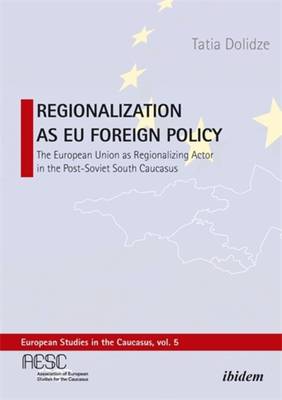
Regionalization as EU Foreign Policy
The European Union as a Regionalizing Actor in the Post-Soviet South Caucasus
Tatia Dolidze
€ 43,45
+ 86 punten
Omschrijving
The European Union (EU) is widely recognized as the most advanced model of regional integration. Far less attention, however, has been paid to its role as a regionalizing actor--projecting its regional logic outward and making regionalization a pillar of foreign policy. In this capacity, the EU pursues a twofold approach: clustering states into shared policy frameworks for efficiency, while also promoting cooperation inspired by its own integration experience. This book examines how these dynamics unfold in the post-Soviet South Caucasus--Armenia, Azerbaijan, and Georgia. Here, "region" is less an organic reality than a political construction: Regional identity is contested, historical disputes continue to shape inter-state relations, foreign policy trajectories diverge, and the area is subject to competing external influences. By analyzing how regionalization is embedded in the EU's foreign policy instruments, and tracing its evolution over time, the study identifies recurring patterns and develops a conceptual framework for understanding the EU's regionalization practices, with insights from the South Caucasus potentially extending to other contested regions.
Specificaties
Betrokkenen
- Auteur(s):
- Uitgeverij:
Inhoud
- Aantal bladzijden:
- 230
- Taal:
- Engels
- Reeks:
Eigenschappen
- Productcode (EAN):
- 9783838221069
- Verschijningsdatum:
- 30/06/2026
- Uitvoering:
- Paperback
- Formaat:
- Trade paperback (VS)
- Afmetingen:
- 148 mm x 210 mm


Alleen bij Standaard Boekhandel
+ 86 punten op je klantenkaart van Standaard Boekhandel
Cadeau

AANGERADEN


Beoordelingen
We publiceren alleen reviews die voldoen aan de voorwaarden voor reviews. Bekijk onze voorwaarden voor reviews.